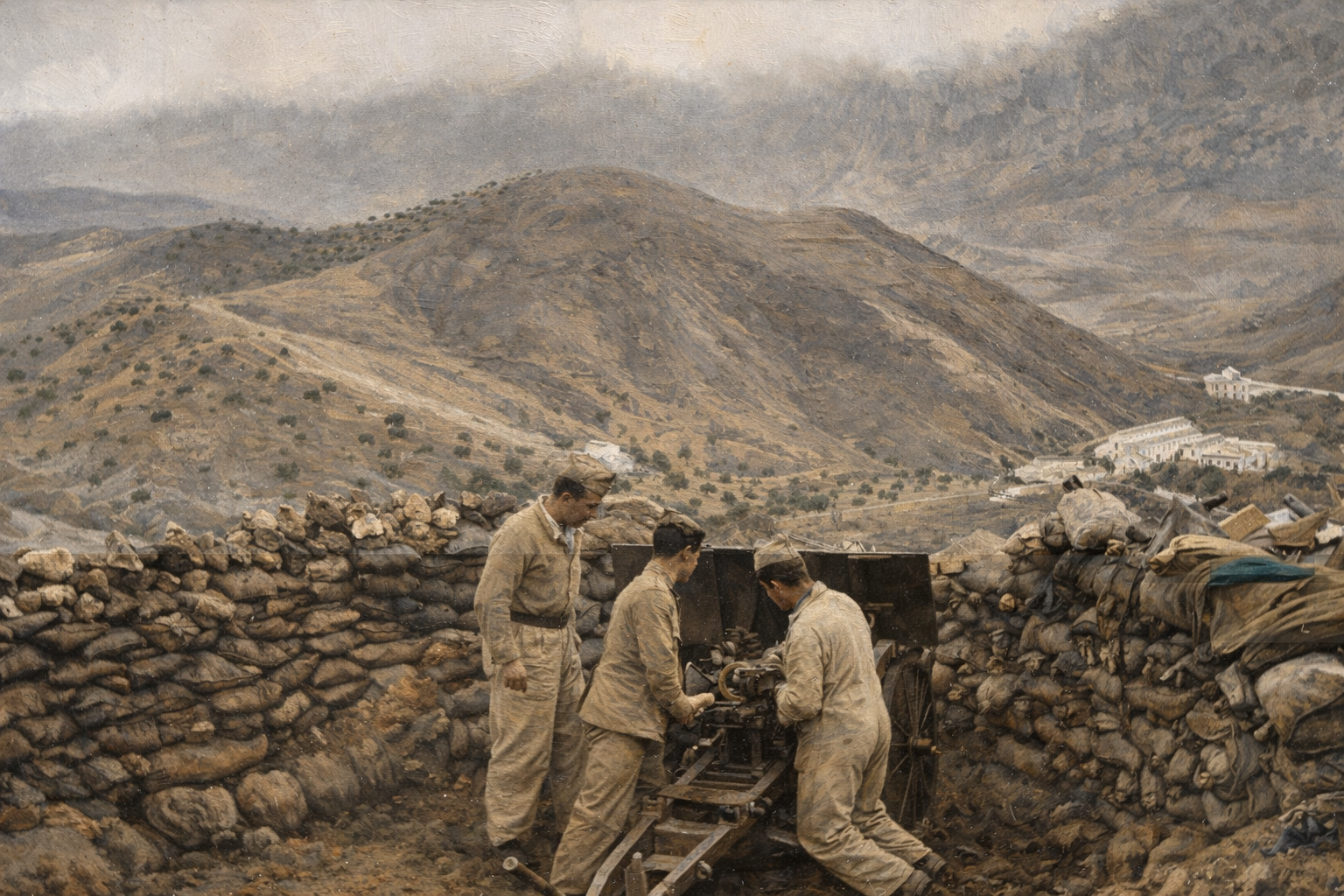
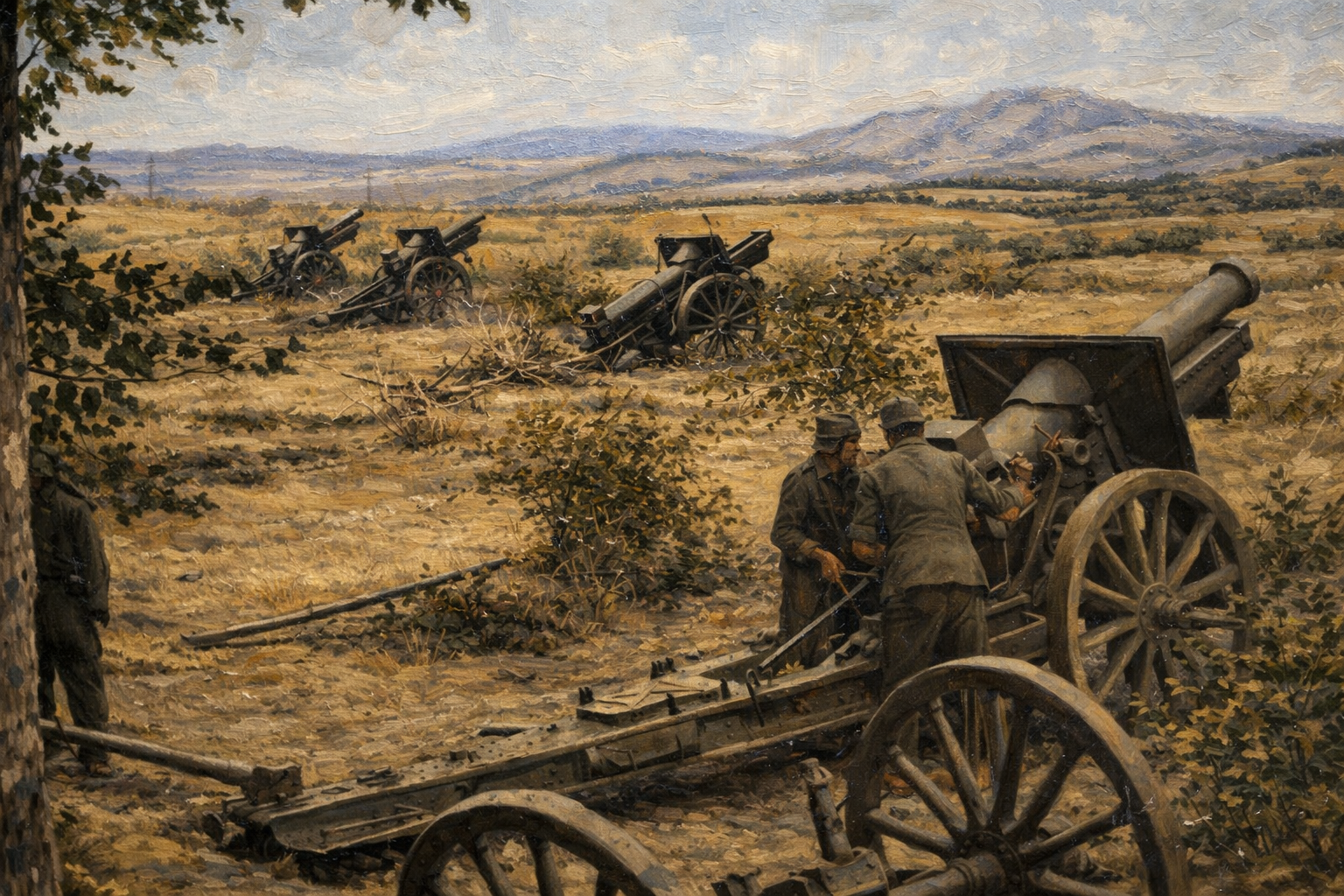
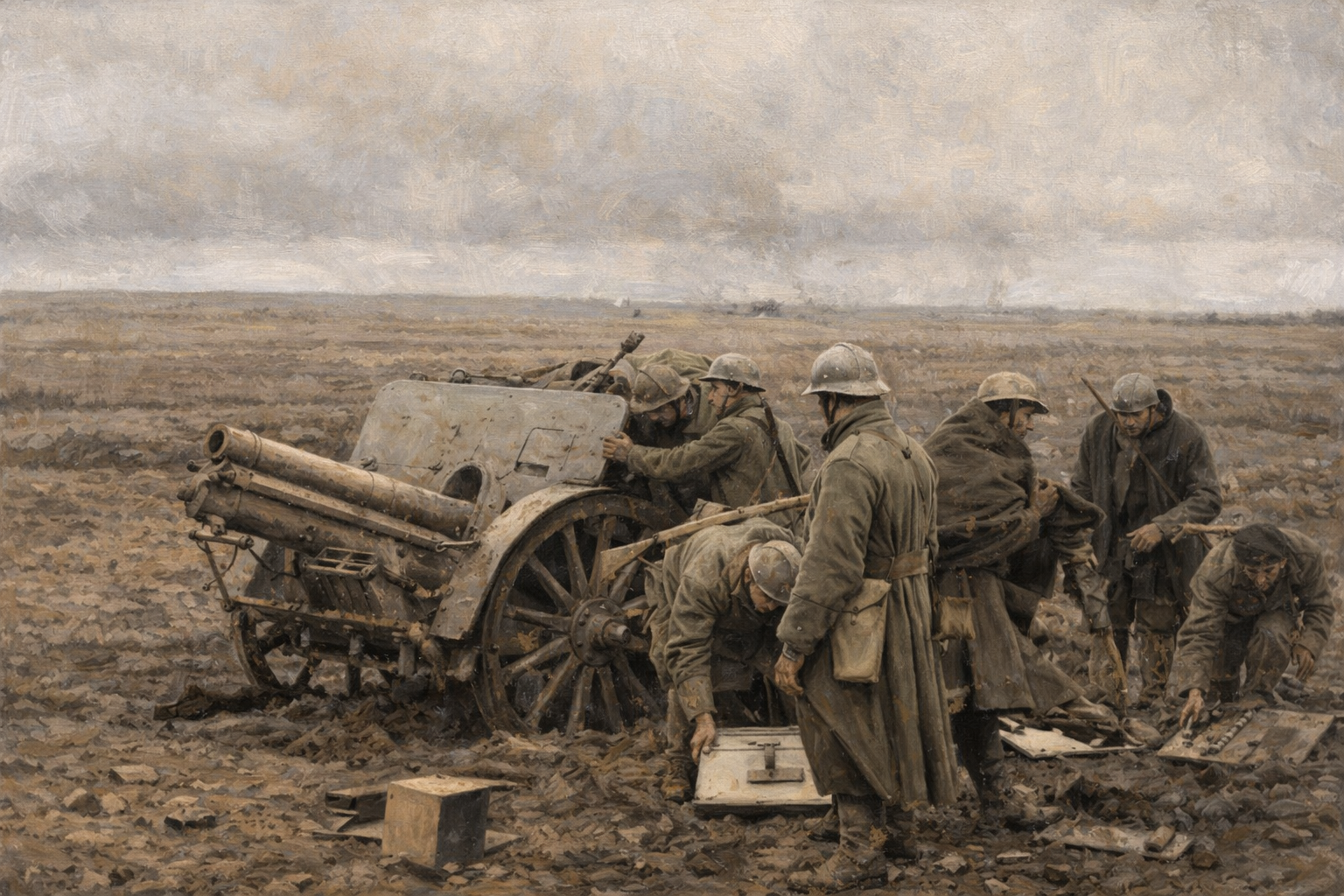
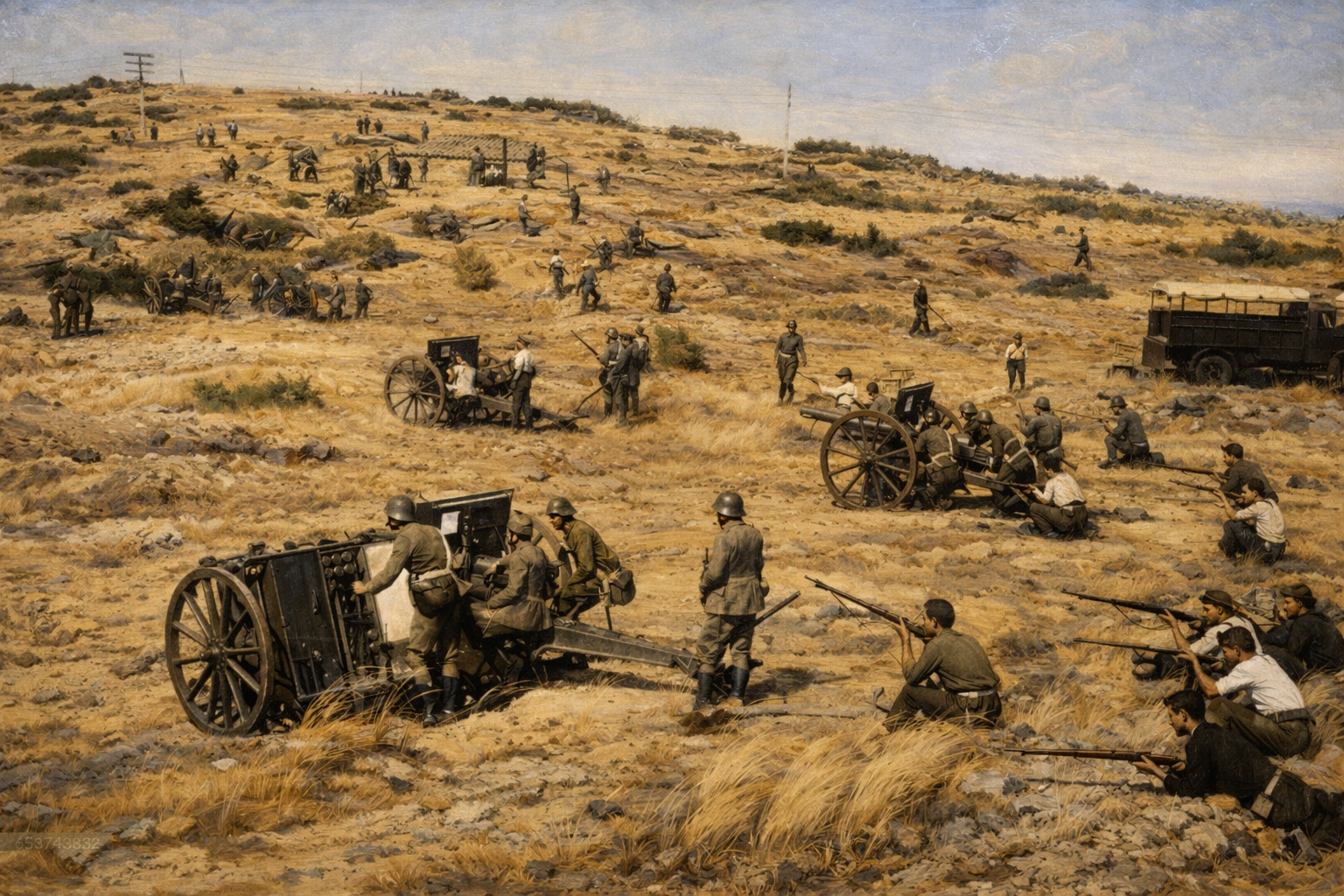
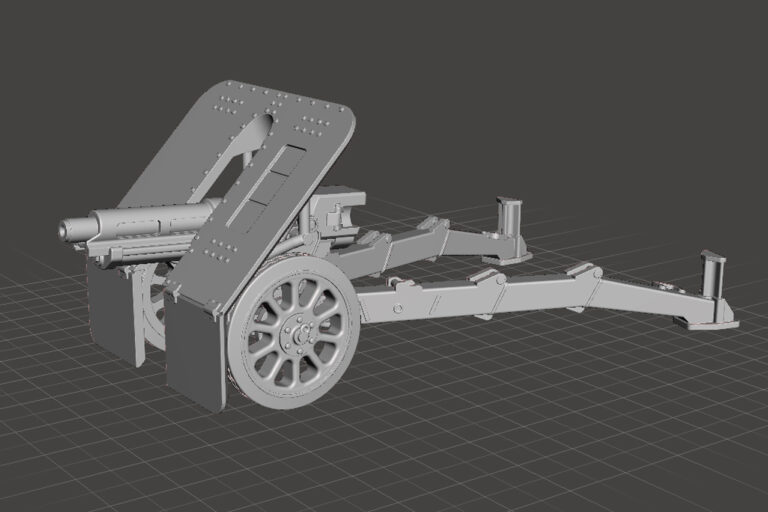
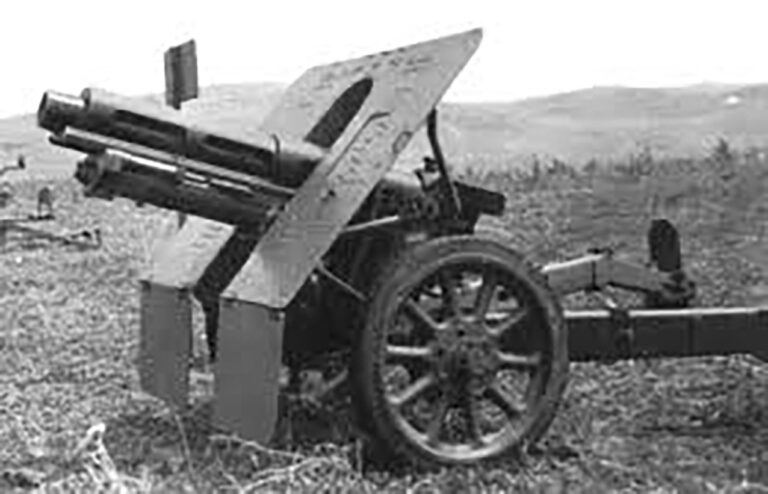
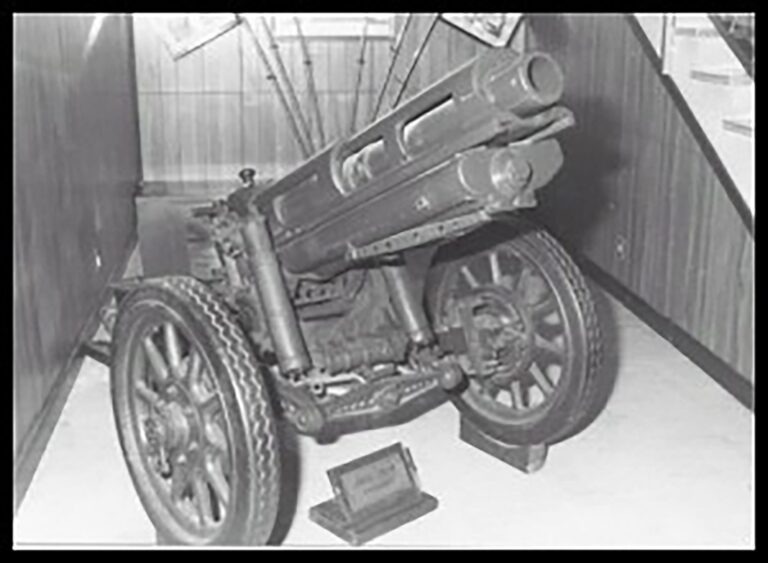
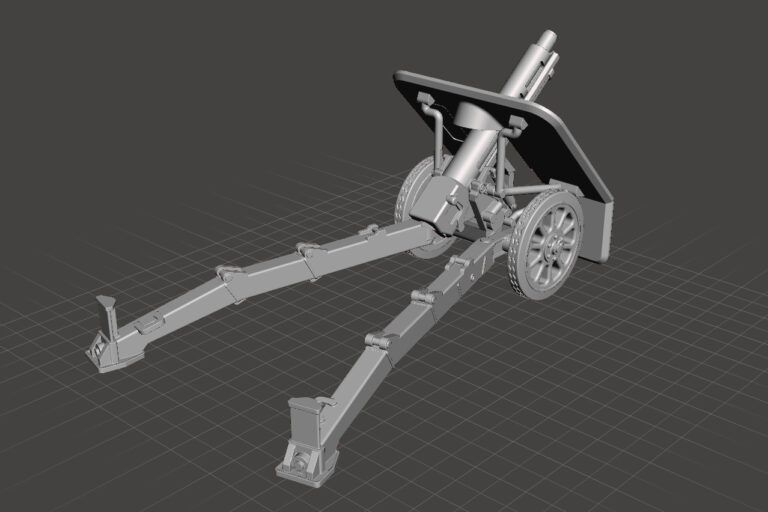
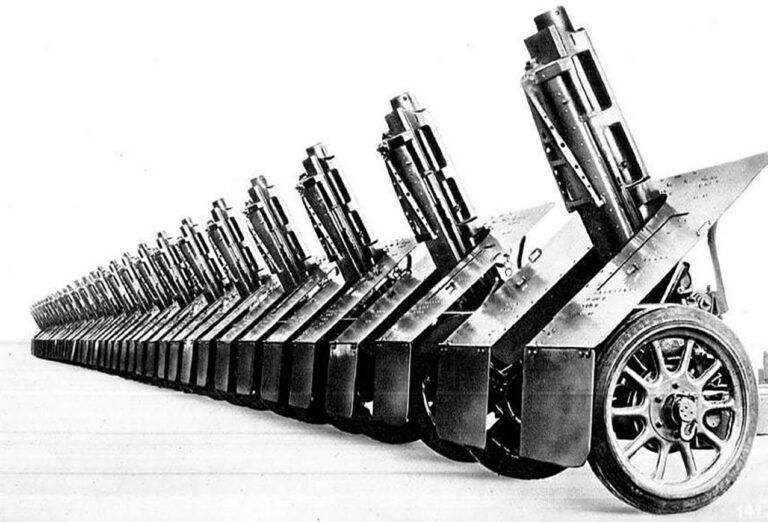
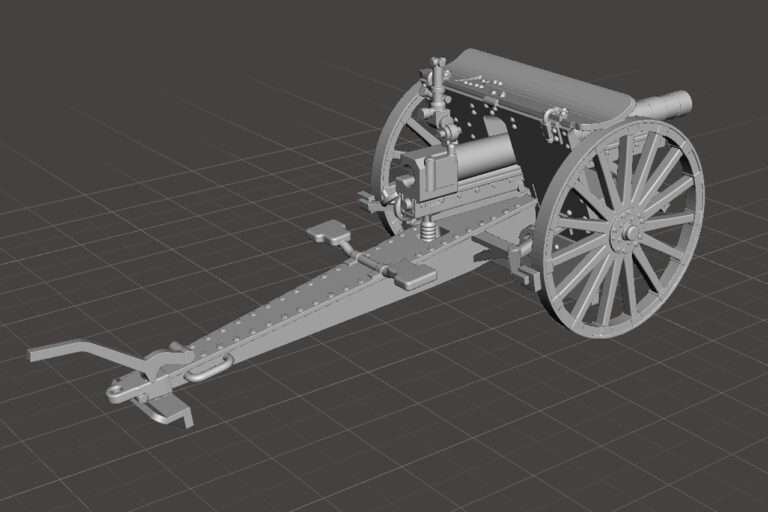
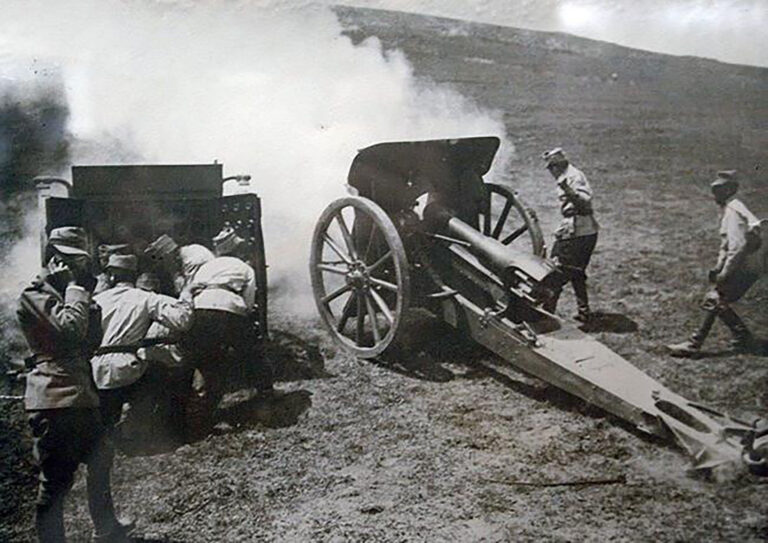
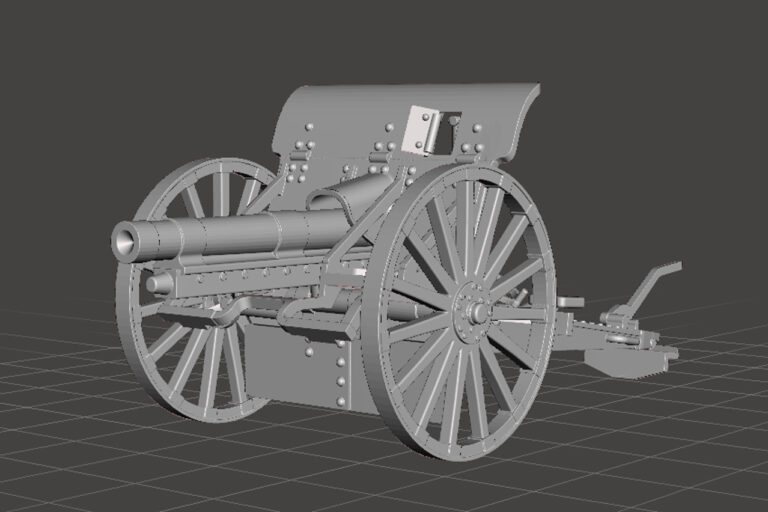
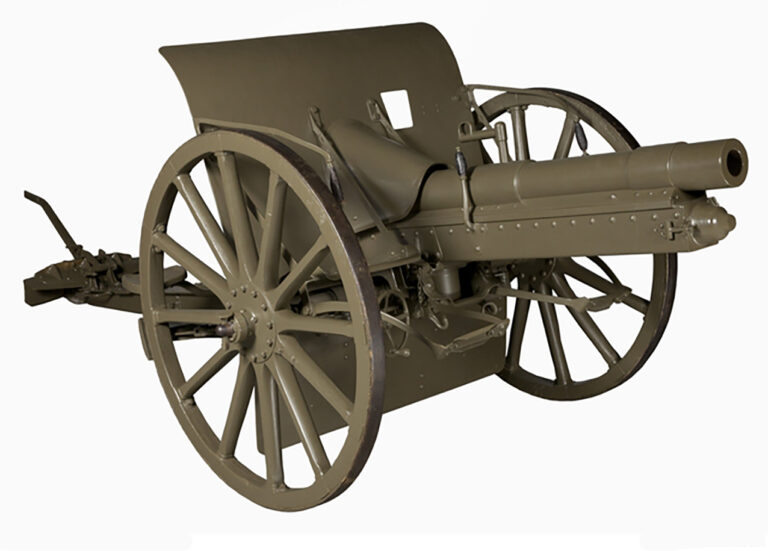
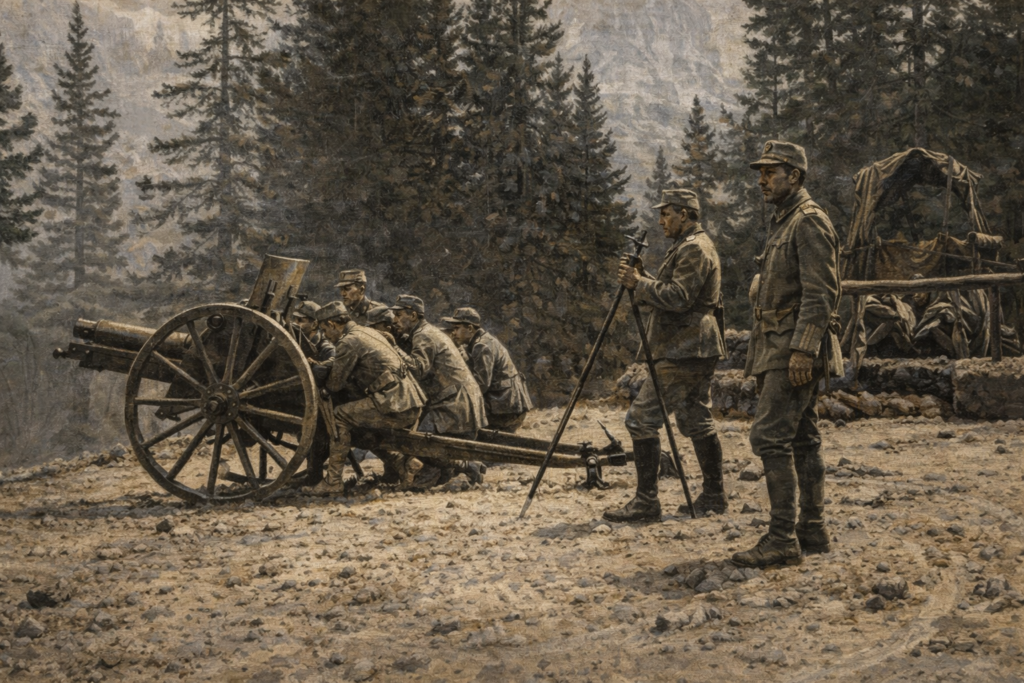
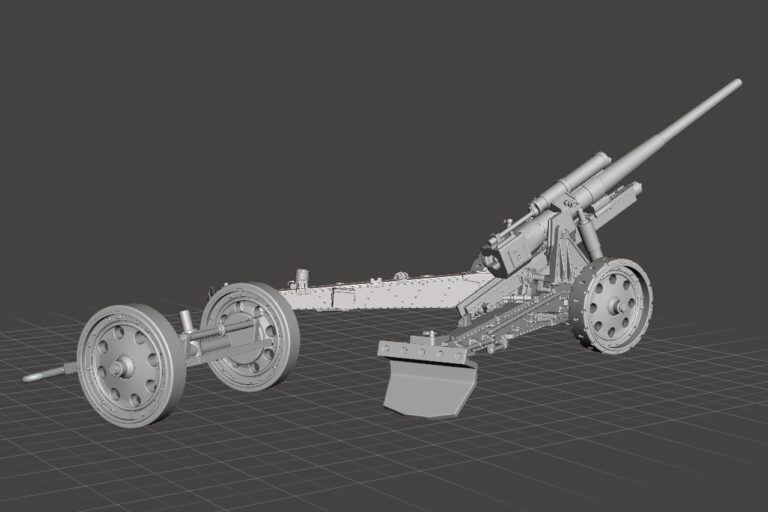
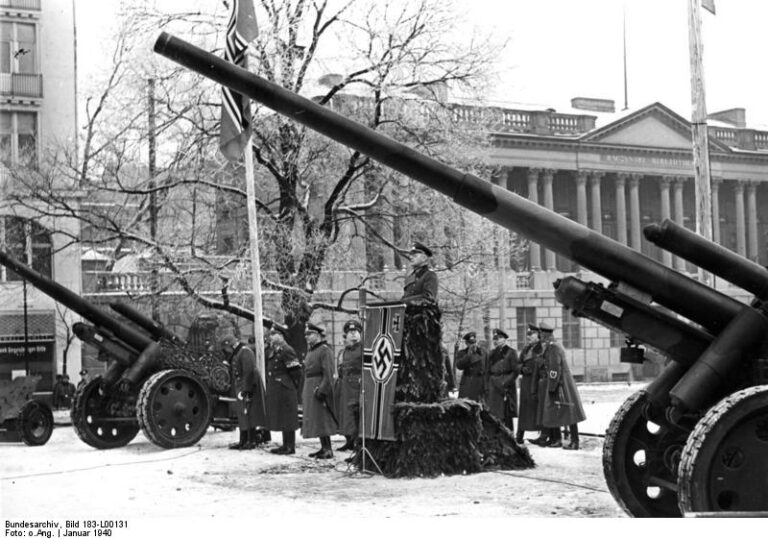
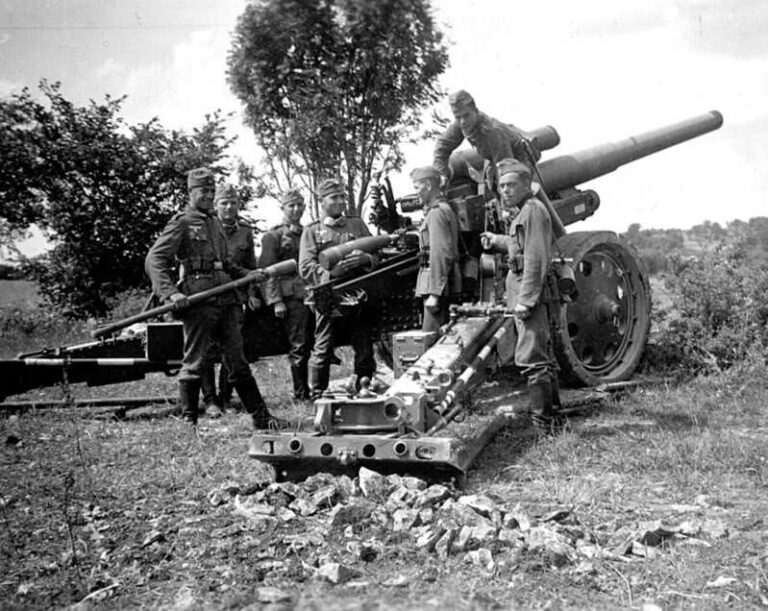
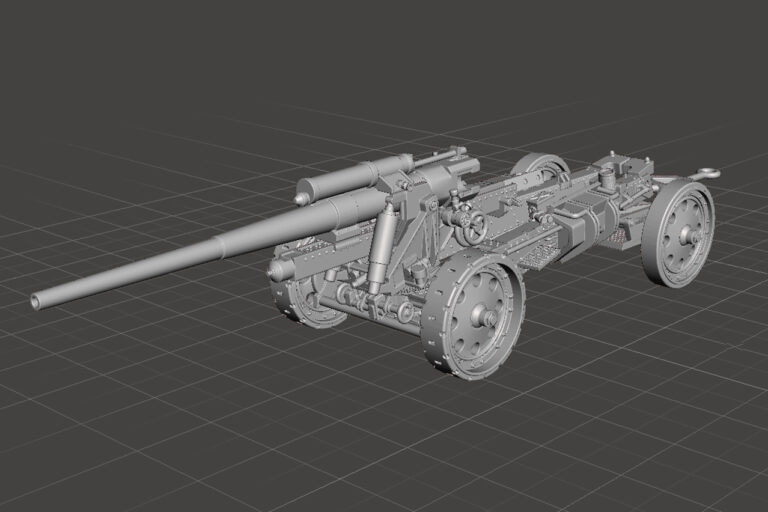
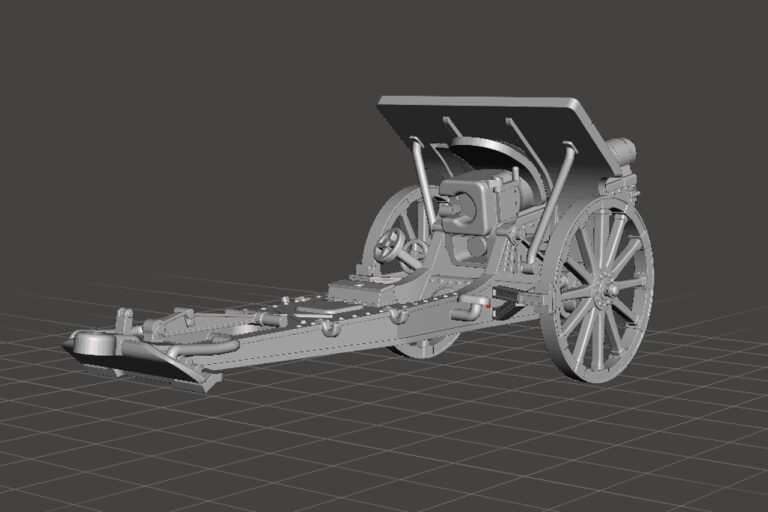
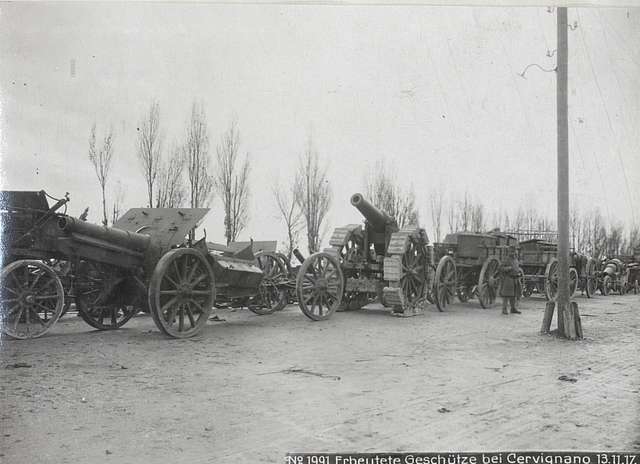
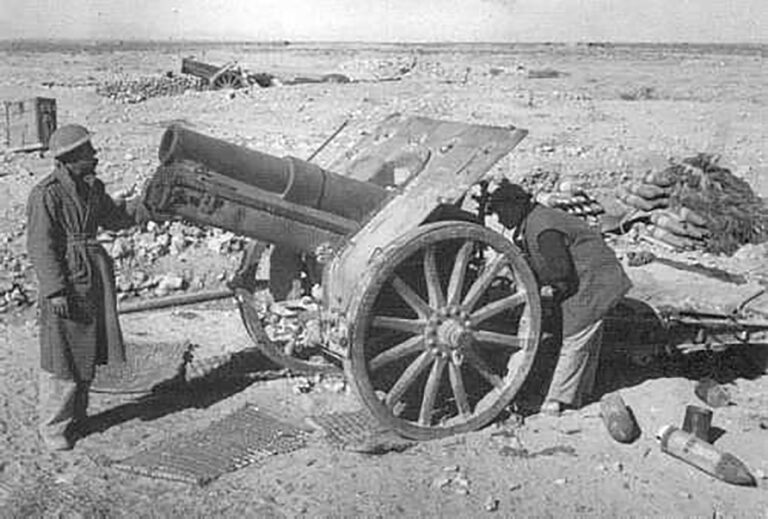
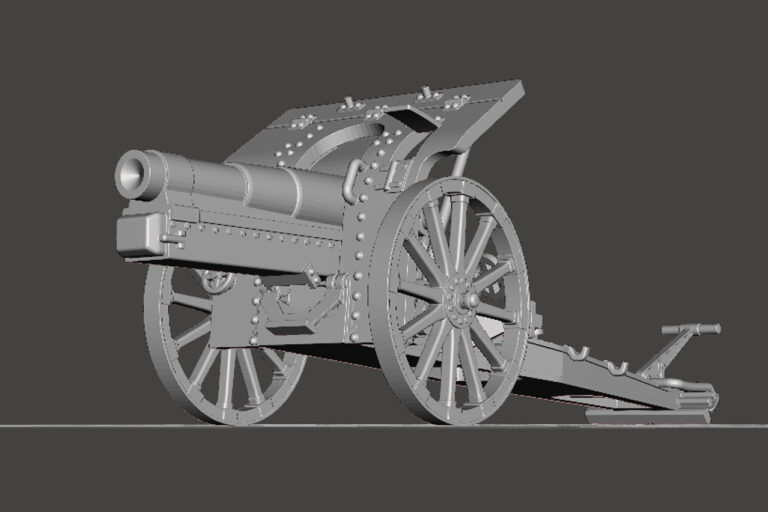
From mountain howitzers to skyward flak, we present the steel that set the tempo — faithfully rendered in miniature, and considerably easier to store than the originals.
At Bayonets & Brushes, we have always maintained that artillery is not merely battlefield furniture; it is the grammar of war. In the Spanish Civil War (1936–1939), guns did not whisper — they dictated. Our latest releases focus squarely on the artillery systems that shaped that conflict, from anti-aircraft pieces to mountain howitzers and heavy siege ordnance.
Before we dive into the brass and barrels of our latest artillery releases, it’s worth stepping back and appreciating why the Spanish Civil War occupies such a vivid place in the annals of both military history and the wargaming hobby. Between 1936 and 1939, the battlefields of Spain became a proving ground not just for ideologies but for the very technologies of modern warfare, as foreign powers poured matériel, doctrine and men into a conflict that foreshadowed the wider conflagration soon to engulf the globe.
Artillery, in particular, became the backbone of much of that struggle. Whether in the rugged valleys of the north or across the dry plains of Aragón, guns — from light anti-aircraft pieces up to heavy siege howitzers — dictated the tempo of battles. Nationalist and Republican forces alike sought to master the geometry of fire, the physics of recoil, and the unforgiving maths of range tables, often learning these lessons under punishing conditions.
At Bayonets & Brushes, we’ve long recognised that making these machines of war tangible — through historically faithful miniatures — allows enthusiasts to engage not merely with the look of the period but with its technical and tactical depths. Our Spanish Civil War range responds to the clear demand among hobbyists for accuracy, variety, and the sheer joy of assembling and painting machines that once shaped real battlefields.
Each miniature has been developed with an eye toward technical authenticity and historical fidelity, covering their mechanical development, entry into armed force registers, and documented employment in Spain up to March 1939. Beyond that date we may nod politely toward future service, but we shall not linger.
Let us begin.
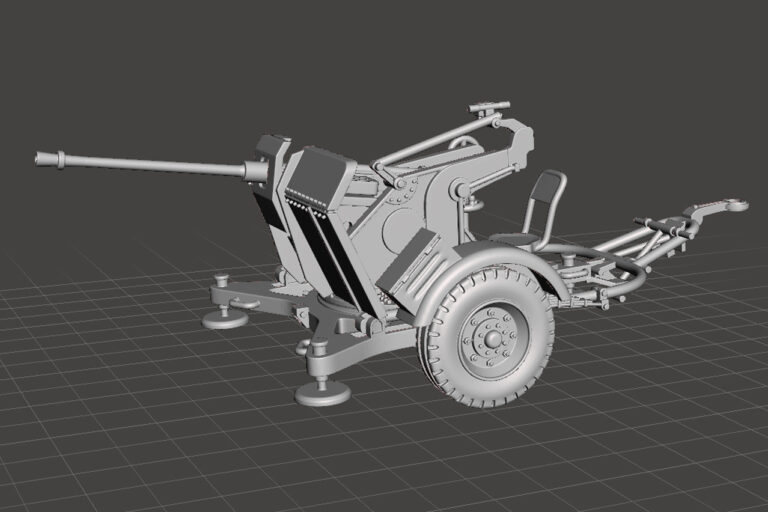
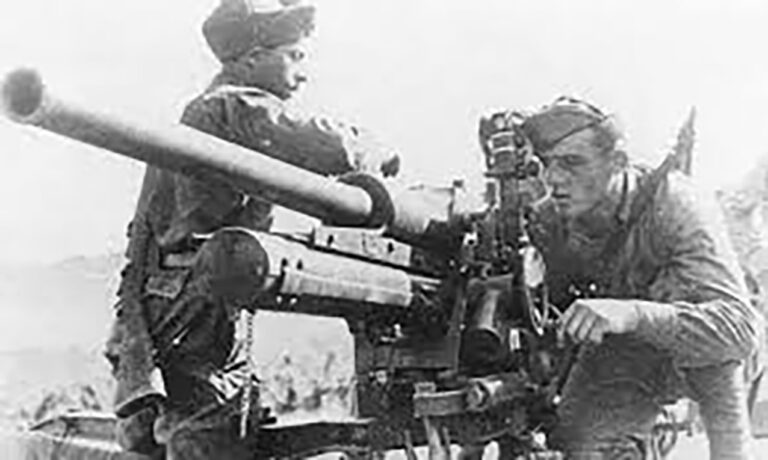
20mm Flak 30 – Deployed
Few weapons better symbolise the rapid militarisation of the 1930s than the 20mm Flak 30.
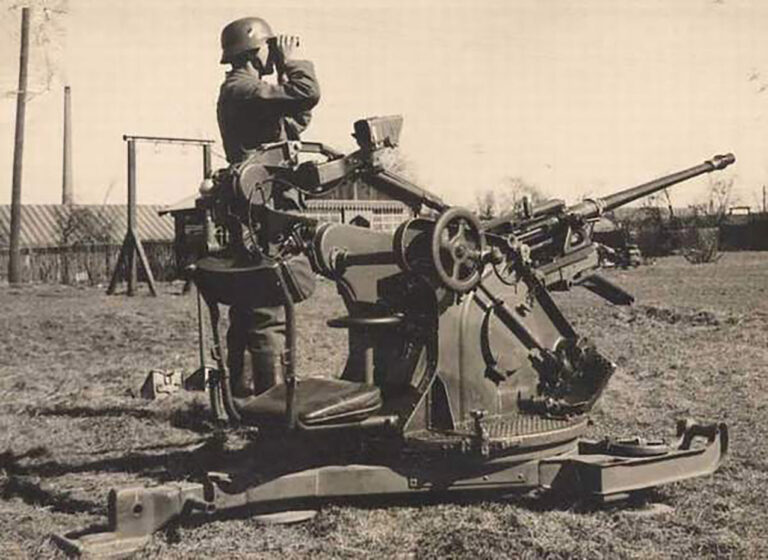
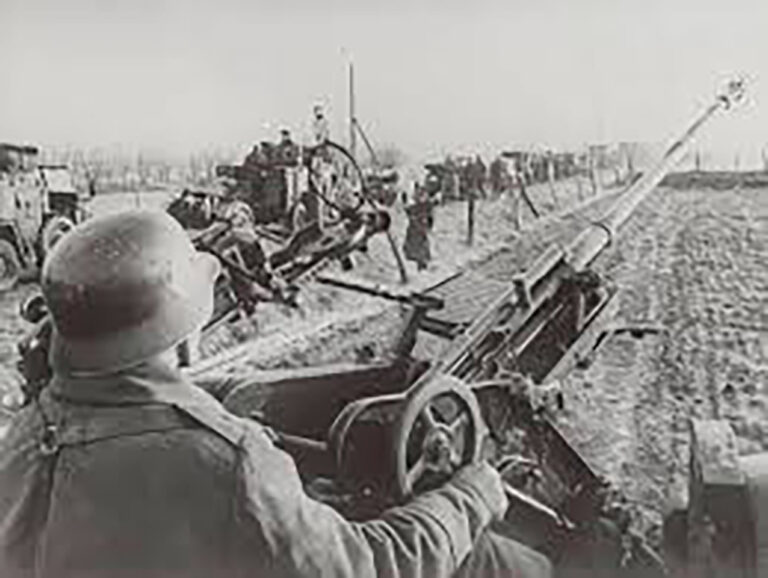
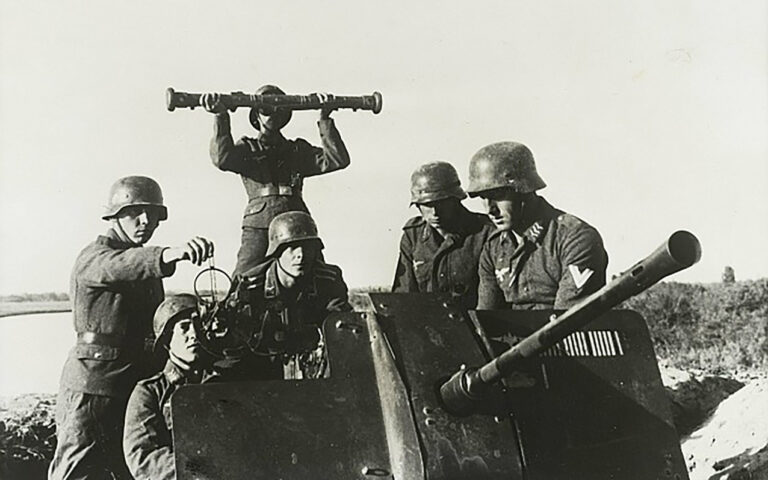
Developed by Rheinmetall in the late 1920s as Germany reconstituted its air defence capabilities, the 2cm Flak 30 entered Luftwaffe and Heer registers in the early 1930s as a light automatic anti-aircraft gun. Gas-operated and fed by 20-round box magazines, it provided high-rate close-range defence against low-flying aircraft. Deployed to Spain with the Condor Legion, it was employed not only in air defence of Nationalist positions but frequently in a ground support role, engaging infantry and light vehicles with devastating rapid fire.
In deployed configuration, the Flak 30 speaks to the static defence of forward airstrips and logistics hubs during the conflict’s most intense air phases.
20mm Flak 30 – Limbered
Before it barked, it travelled.
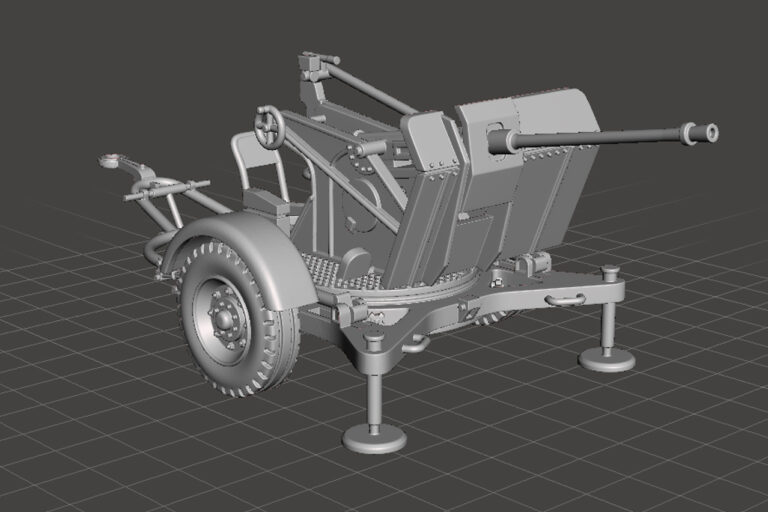
The Flak 30’s design incorporated the Sonderanhänger 51 trailer, allowing rapid redeployment by light vehicles. Entering German service registers as part of integrated air defence units, mobility was central to its doctrinal value. In Spain, batteries supporting Nationalist forces relied upon such mobility to reposition in response to Republican air activity, particularly during operations around Madrid and the Ebro. The limbered configuration reflects the fluidity of the air war.
A reminder that even static defence requires movement before it becomes static.
Böhler 47-32 M.1932 AT Gun – Deployed
The interwar period birthed many anti-tank designs; few were as export-minded as the Austrian Böhler.
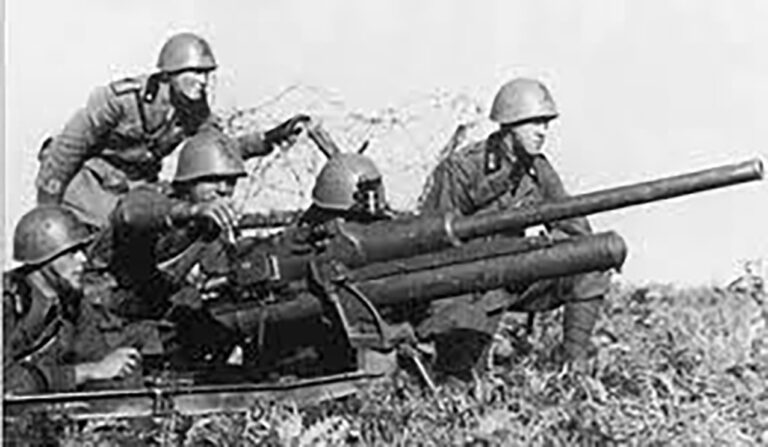
Designed by Böhler of Austria and entering service in the early 1930s, the 47mm M.1932 was a lightweight anti-tank gun adopted by several nations, including Italy. With a high-velocity 47mm projectile and low silhouette, it was entered into Italian Army registers prior to the Ethiopian campaign and subsequently deployed to Spain in support of Nationalist forces. There it proved effective against early war armour such as T-26 tanks when employed at tactically sound ranges.
Deployed, it represents the increasing mechanisation of the battlefield — and the countermeasures born in response.
Böhler 47-32 M.1932 AT Gun – Semi-Deployed
Sometimes readiness is everything.
The M.1932’s split trail and shield allowed for rapid transition between travel and firing positions. In Spanish service under Nationalist command, the gun’s mobility allowed it to be shifted between sectors threatened by Republican armour thrusts. Semi-deployed states were common in fluid engagements, particularly during the northern campaigns.
This variant captures that transitional moment — doctrine in motion.
Böhler 47-32 M.1932 AT Gun – Limbered
No anti-tank gun is of use if it cannot reach the tank.
Designed for horse or motor traction, the solid-wheel configuration reflected the mixed mobility of 1930s armies. Entered into multiple European service registers, its Spanish Civil War employment demonstrated how quickly anti-tank assets needed repositioning in response to mechanised threats. Limbered, it represents the logistical backbone behind tactical success.
Artillery does not teleport. It is hauled — with effort.
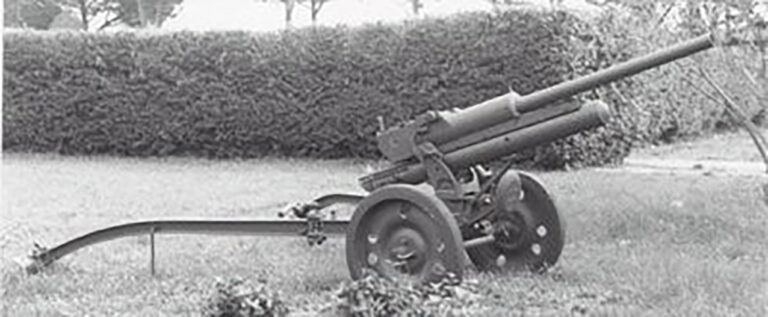
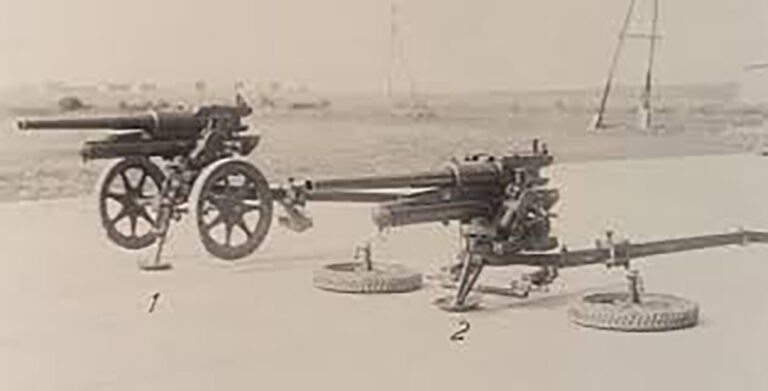
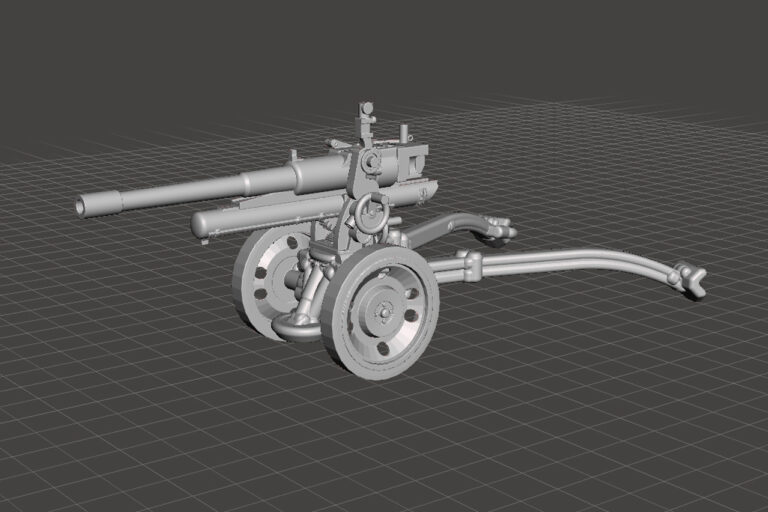
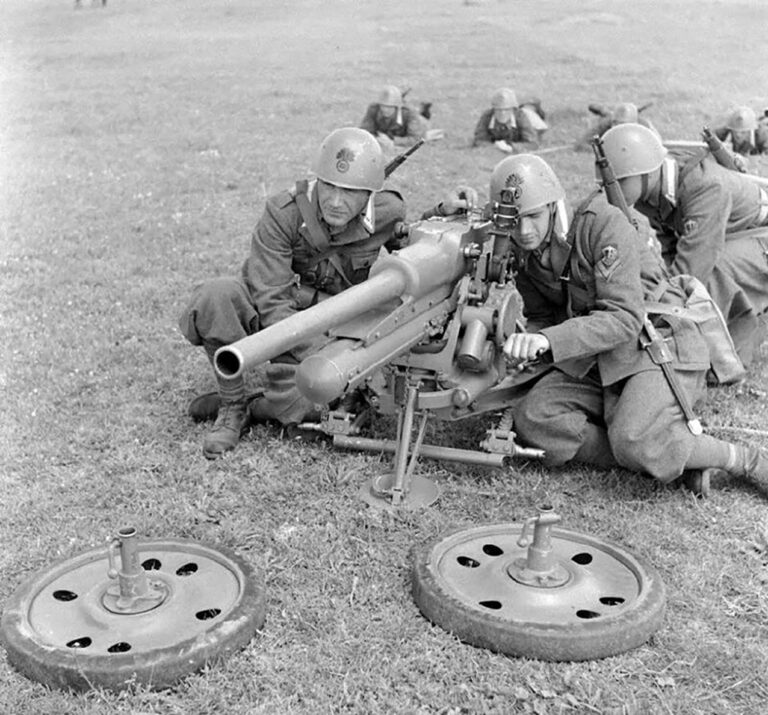
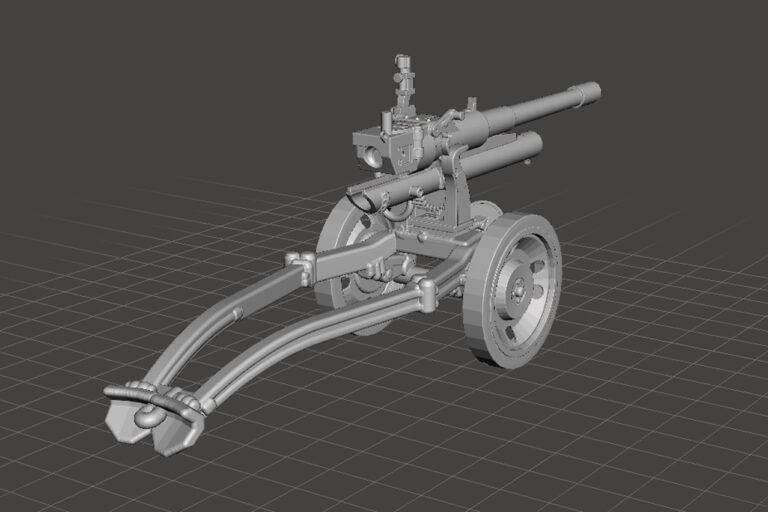
Obice da 75-18 Mod.34 – Barrel Level
Italian mountain artillery possessed a character all its own.
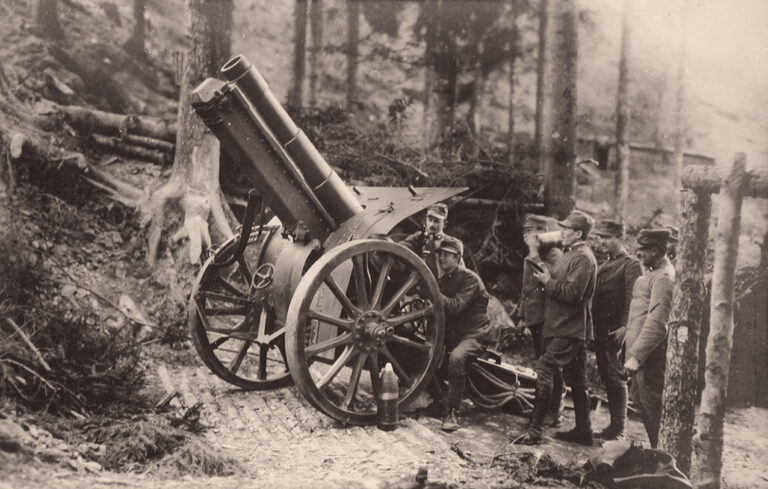
Developed in the early 1930s for alpine warfare, the 75-18 Mod.34 howitzer was lightweight, dismantlable, and adaptable. Entered into Italian Army registers for mountain units, it saw deployment with Italian Corpo Truppe Volontarie in Spain. There it provided close infantry support in difficult terrain, delivering high-angle fire against fortified Republican positions.
With barrel levelled, it reflects readiness at standard elevation before engagement.
Obice da 75-18 Mod.34 – Barrel Raised
Elevation changes perspective — and trajectory.
Its hydro-pneumatic recoil system and short barrel enabled steep firing arcs. In Spain, such high-angle fire proved invaluable during assaults on entrenched Republican lines. Though later famed in a different global conflict, in Spain it established its reputation as flexible close support artillery.
Raised barrel, raised eyebrows.
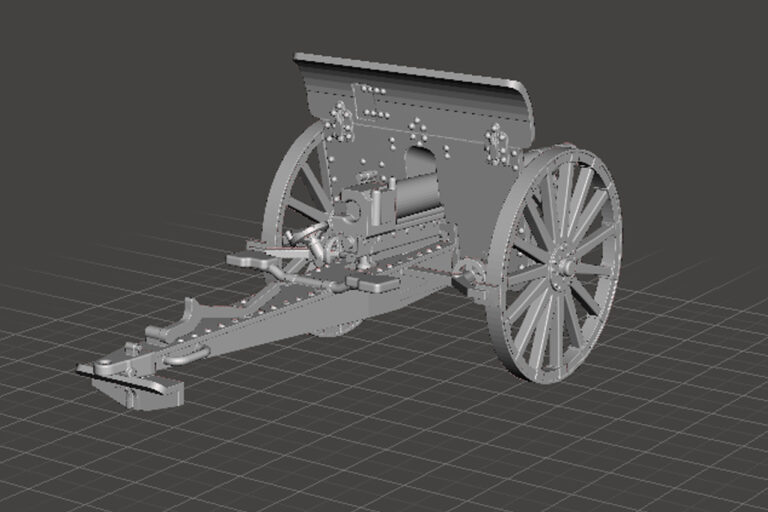
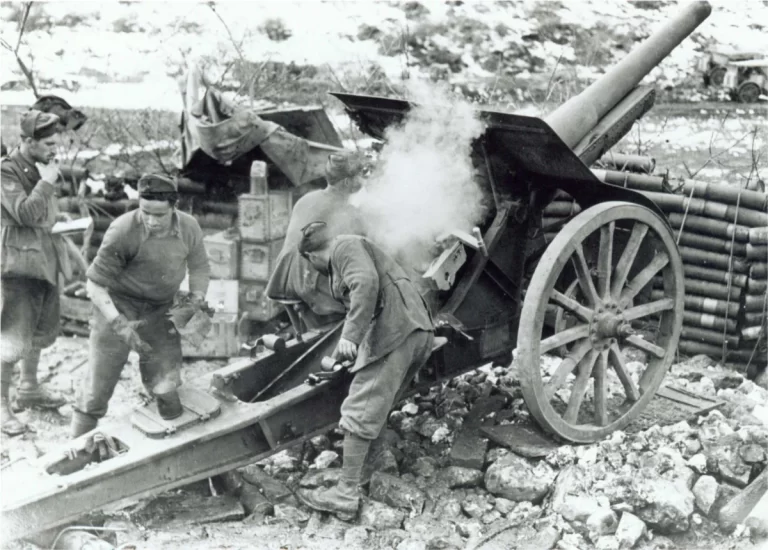
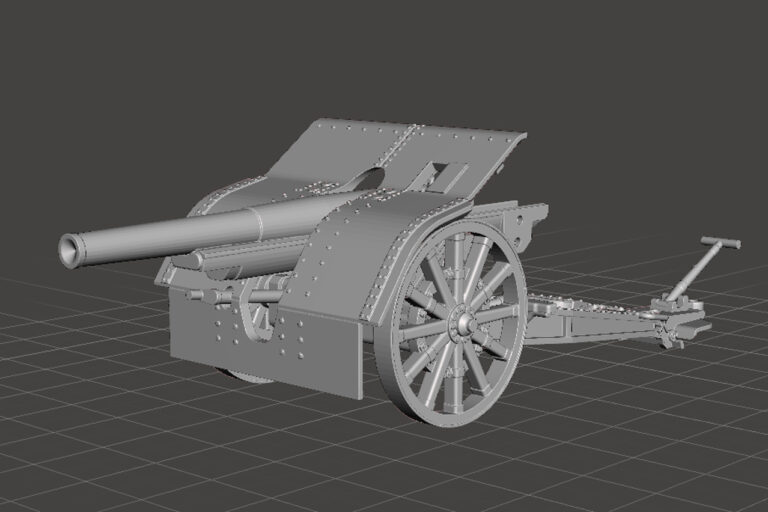
Cannone da 75-27 Modello 1906 – Deployed (Wooden Wheels & Folded Shield)
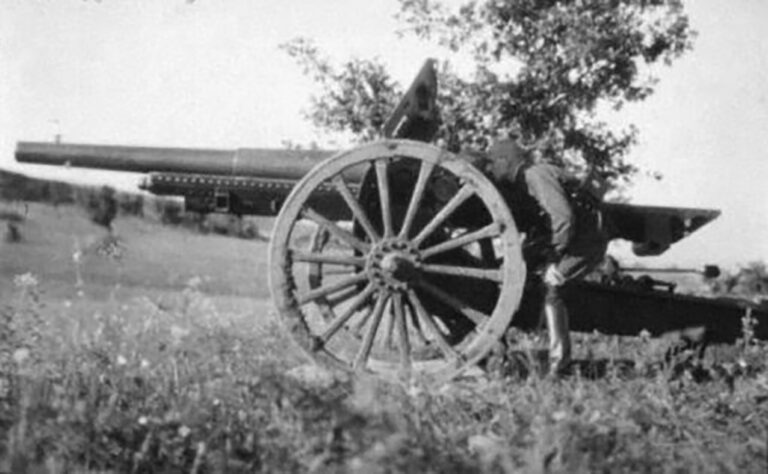
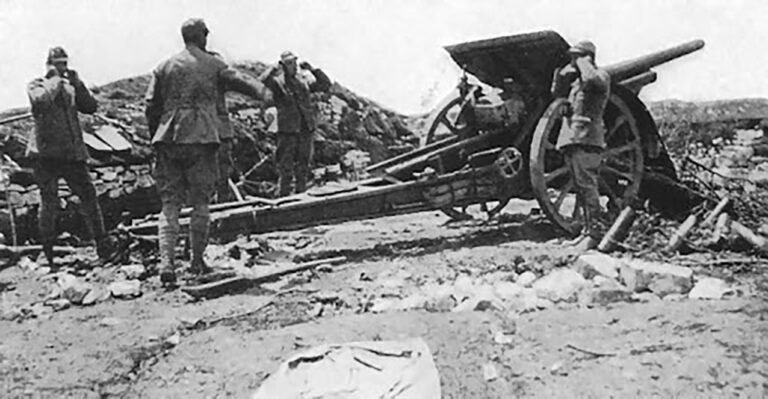
An elder statesman of artillery, the 75-27 Modello 1906 was already venerable when Spain ignited.
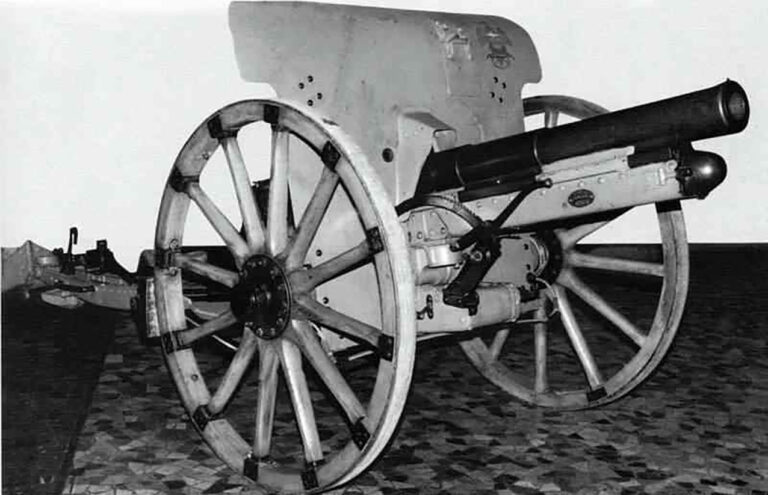
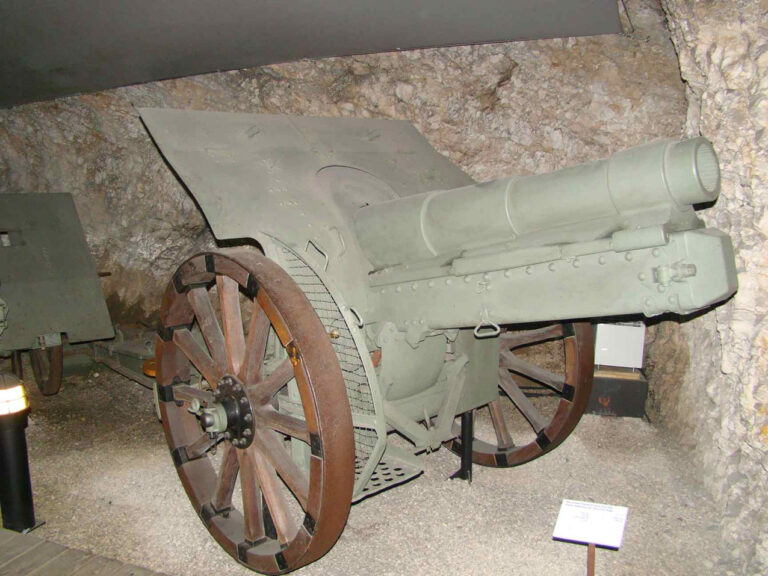
Originally developed by Krupp for Italy in the early twentieth century, the 75-27 entered Italian Army registers prior to the Great War. Modernised incrementally through the interwar years, it retained wooden-spoked wheels and a box trail carriage. In Spain, it served with Nationalist and Italian volunteer formations as a field gun for direct and indirect fire support, its reliability compensating for its relative antiquity.
Deployed with folded shield, it illustrates how yesterday’s engineering remained entirely serviceable in today’s war.
Cannone da 75-27 Modello 1906 – Deployed (Wooden Wheels)
Artillery, like monarchy, survives by adaptation.
Though conceived before recoil systems reached maturity, the 75-27 incorporated hydro-spring recoil and shield protection in its updates. Retained within Italian registers throughout the 1930s, it was exported and supplied to Nationalist Spain where it provided conventional field artillery support during major offensives including those in Aragón. Its ballistic characteristics were well understood by its crews.
Deployed plainly, it is artillery stripped to its essential competence.
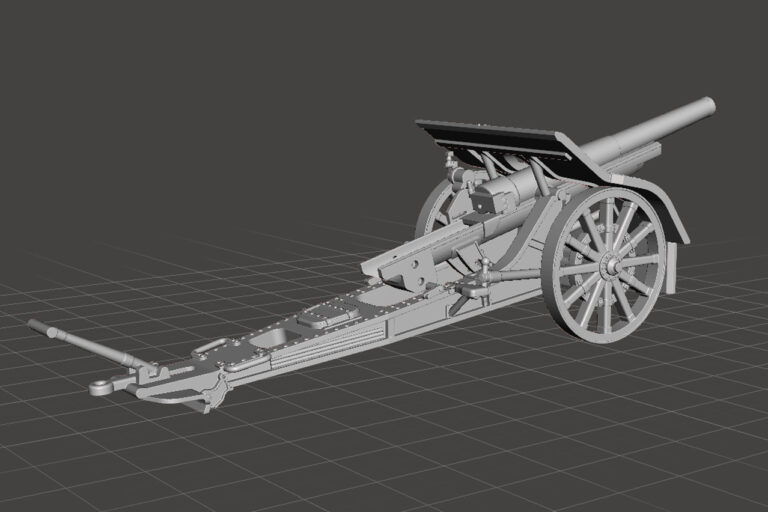
Cannone da 75-27 Modello 1906 – Limbered
Even an old soldier must travel.
Designed in an era of horse traction, the 75-27 remained compatible with animal draft through the 1930s. In Spain, where motorisation varied widely between units, such compatibility was invaluable. Limbered configurations reflect the realities of campaigning across Spain’s uneven terrain, where logistics frequently dictated tempo.
Mobility may not win battles alone, but it certainly decides when they begin.
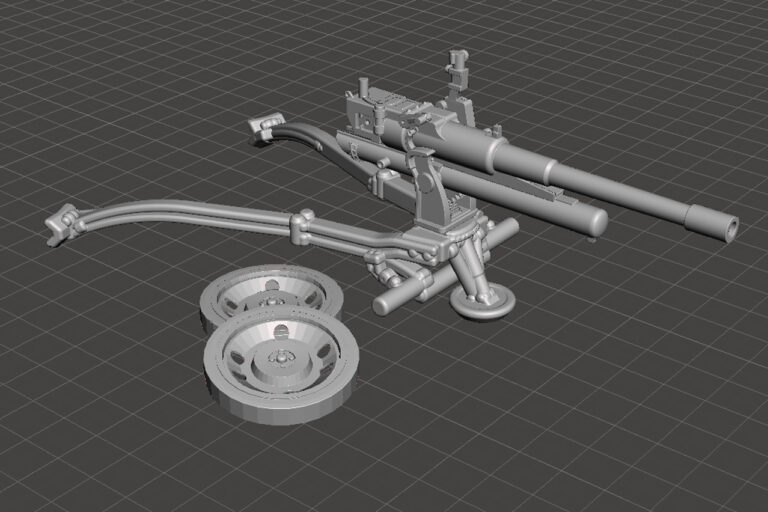
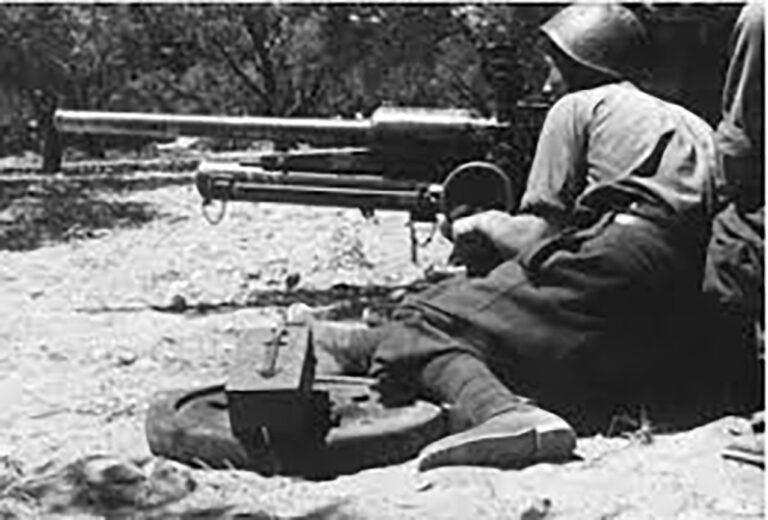
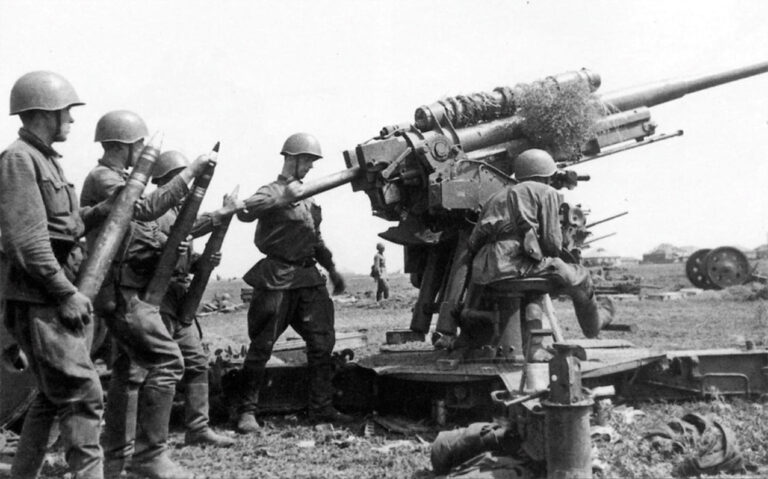
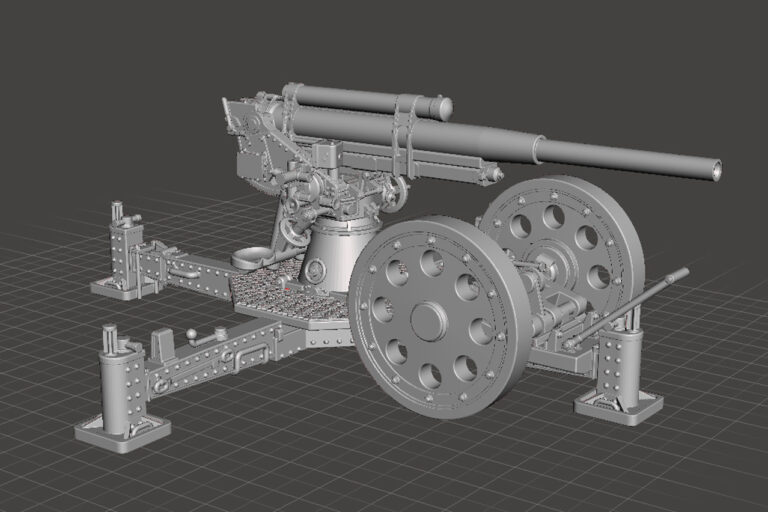
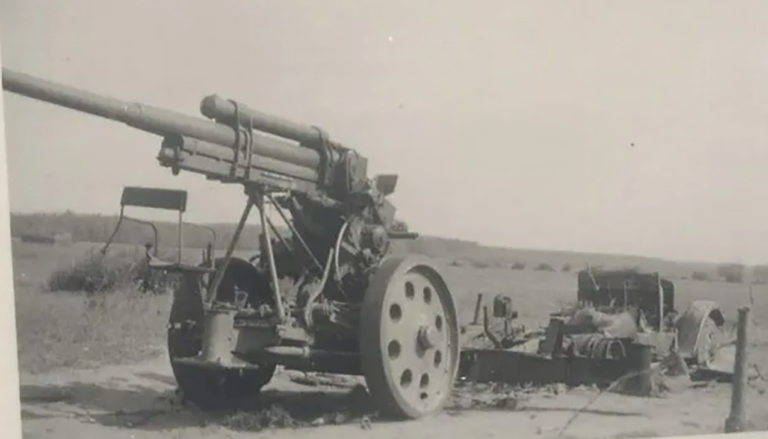
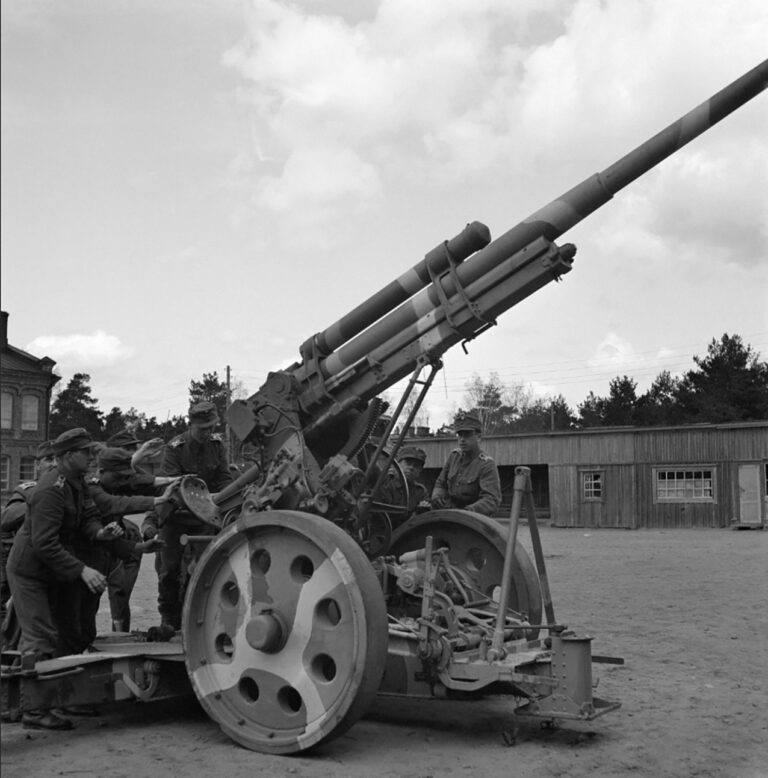
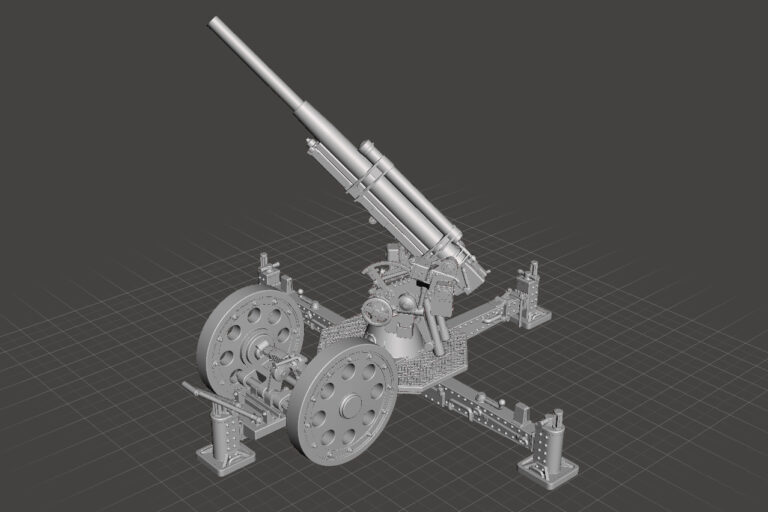
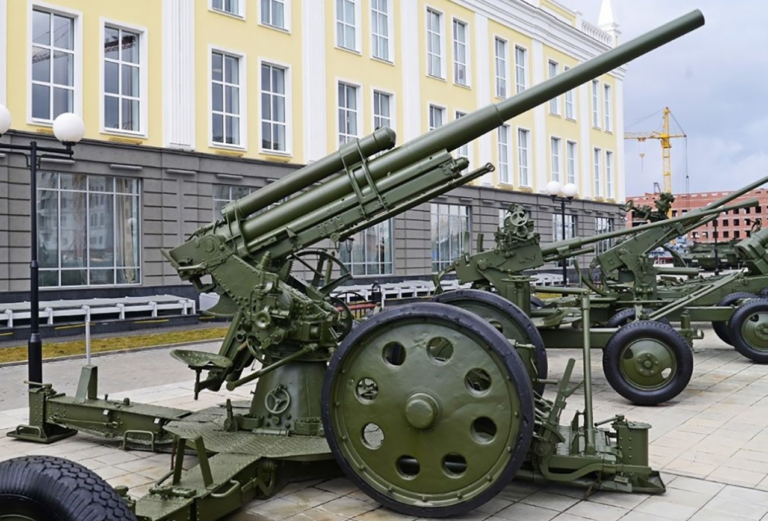
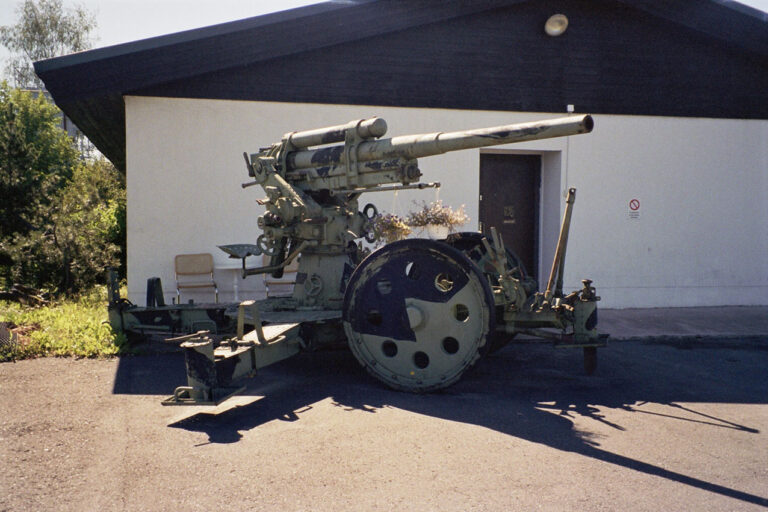
76mm Air Defence Gun M1931 (3-K) – Barrel Level Deployed
Soviet engineering found its proving ground in Iberia.
Developed through cooperation between Rheinmetall and Soviet industry in the late 1920s, the 76mm M1931 (3-K) entered Red Army registers as a modern heavy anti-aircraft gun. Featuring a high-velocity 76.2mm projectile and cruciform mount, it was supplied to Republican forces in Spain. There it provided strategic air defence over key urban and logistical centres.
Barrel levelled, it stands poised before elevation — calm before engagement.
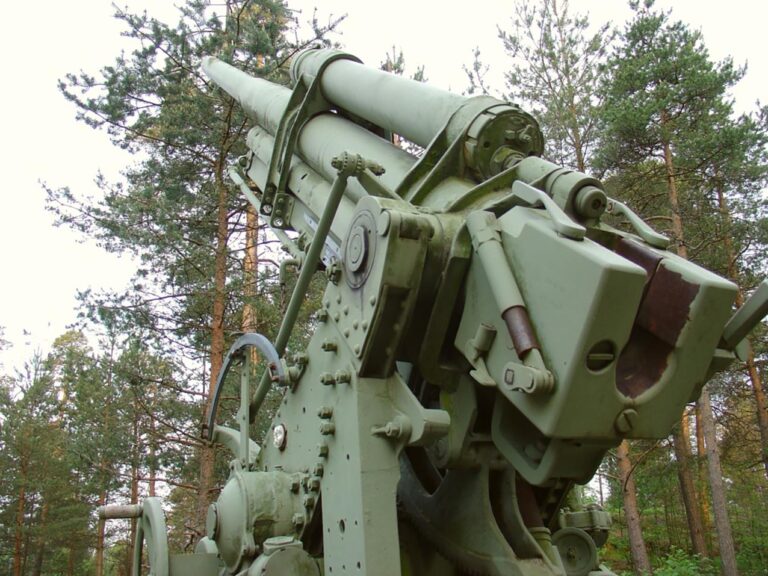
76mm Air Defence Gun M1931 (3-K) – Barrel Raised Deployed
Air defence demands vertical ambition.
Capable of high-angle fire and advanced fire-control integration for its era, the 3-K represented Soviet commitment to modern anti-aircraft doctrine. In Spain, raised-barrel deployments defended against Nationalist and Condor Legion aircraft, marking one of the earliest theatres in which modern integrated air defence concepts were trialled under combat conditions.
Elevation here is not merely mechanical; it is doctrinal.
76mm Air Defence Gun M1931 (3-K) – Limbered
Strategic assets must relocate as threat axes shift.
Mounted on a transport carriage for towing, the 3-K’s mobility allowed redeployment between threatened sectors. Entered formally into Soviet air defence units before export, its Spanish employment underscored the growing importance of heavy AA mobility in modern warfare.
Limbered, it reminds us that even skyward guns must traverse the earth.
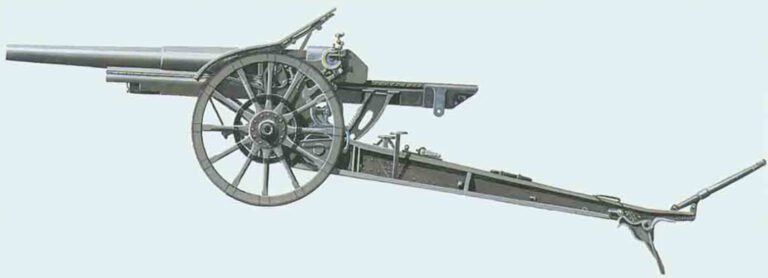
Cannone da 105-28 Modello 13 – Barrel Level
Heavy field artillery often carries imperial pedigree.
Originally of French Schneider design and absorbed into Italian service following the Great War, the 105-28 Modello 13 was retained in Italian registers throughout the interwar period. With its 105mm calibre and robust carriage, it was deployed to Spain in support of Nationalist offensives, delivering heavier indirect fire than the lighter 75mm pieces.
Level barrel indicates readiness for sustained bombardment.
Cannone da 105-28 Modello 13 – Barrel Raised
Weight brings authority.
Its recoil system and elevation range permitted effective counter-battery and preparatory fire. In Spain, such guns were instrumental in deliberate assaults where artillery preparation preceded infantry advance. Though technologically rooted in earlier decades, it remained tactically relevant through careful employment.
Raised, it signifies the deliberate application of force rather than its mere possession.
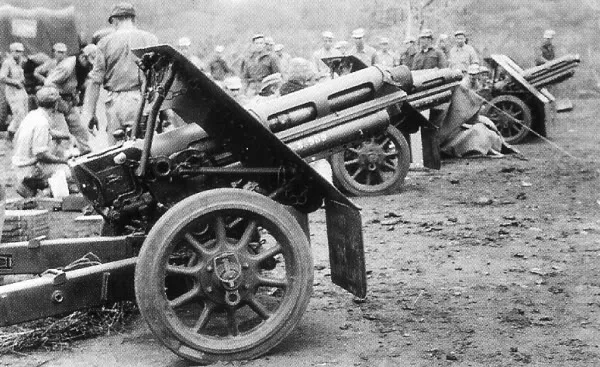
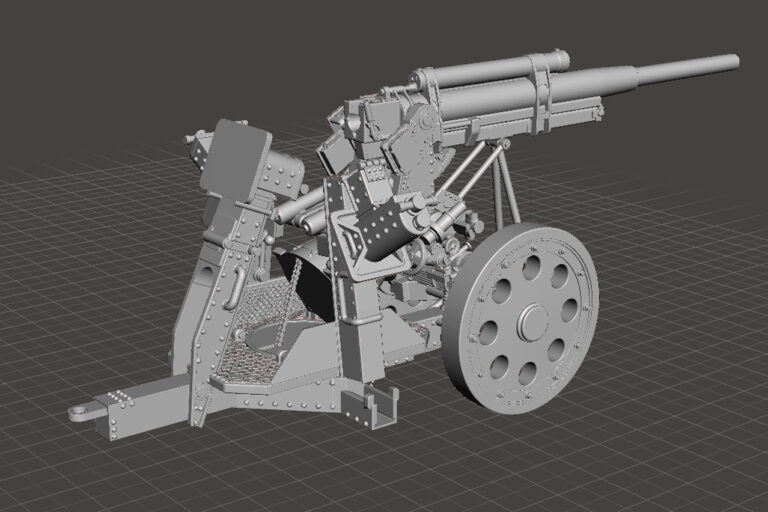
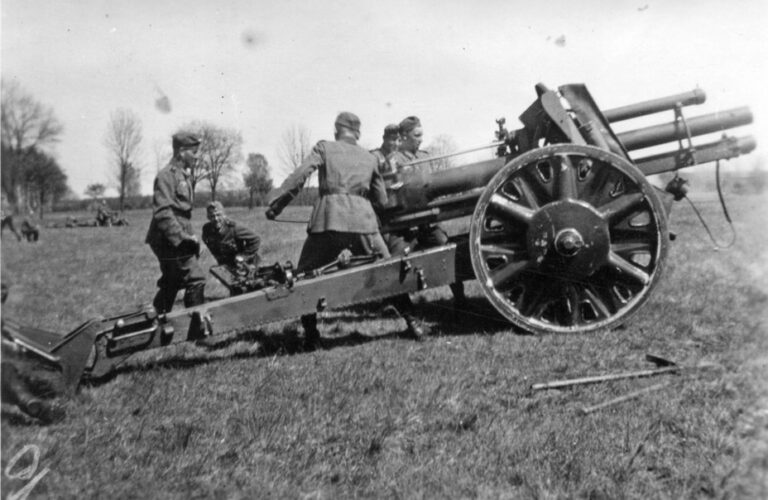
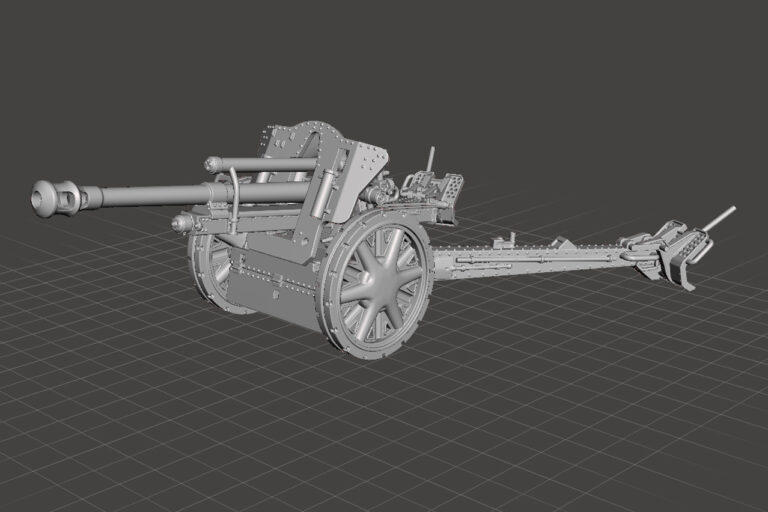
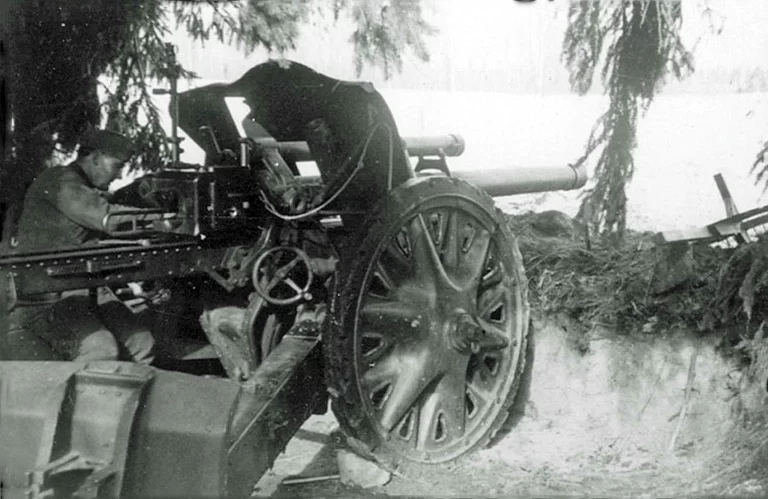
Rheinmetall 10cm leFH 18 – Deployed
German artillery modernisation accelerated rapidly in the 1930s.
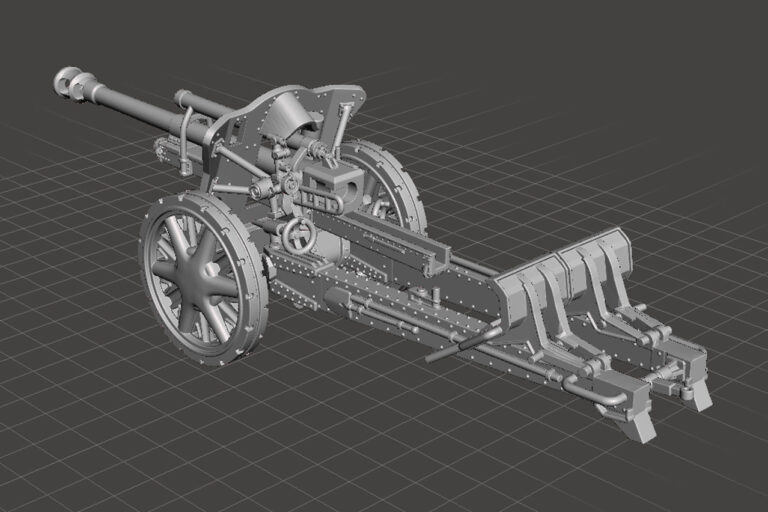
The 10cm leichte Feldhaubitze 18 entered Wehrmacht registers in the mid-1930s as a standard divisional howitzer. Featuring a split trail and improved recoil mechanism, it represented modern German artillery doctrine. Elements were evaluated and indirectly represented in Spain through Condor Legion support and advisory presence, contributing to Nationalist artillery efficiency.
Deployed, it marks Germany’s transition toward fully modern field artillery systems.
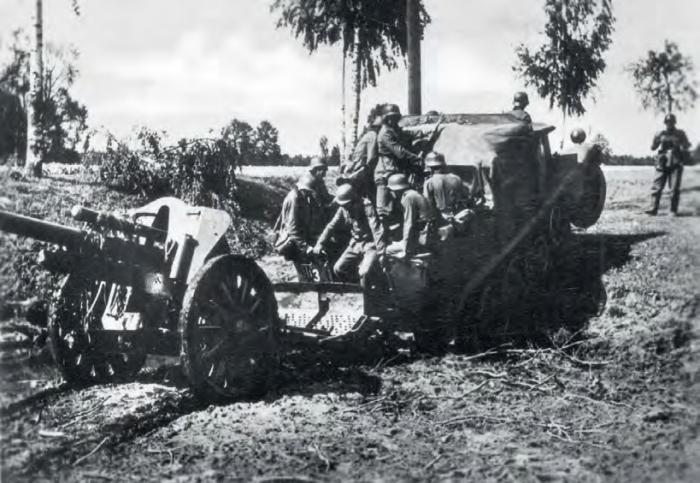
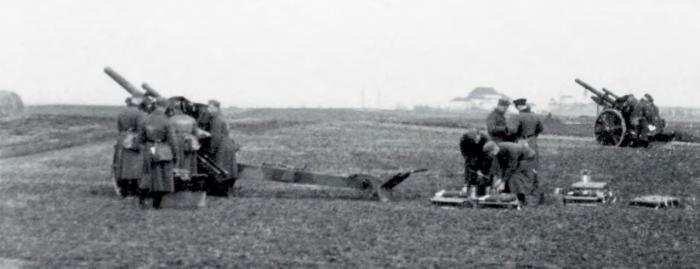
Rheinmetall 10cm leFH 18 – Limbered
Modernity still requires horsepower — mechanical or otherwise.
Designed for motor traction but adaptable to horse draft, the leFH 18 embodied Germany’s hybrid mobility during rearmament. While Spain saw limited direct large-scale deployment, its doctrinal shadow influenced artillery practice. Limbered, it captures the logistical dimension of evolving firepower.
Because doctrine, too, must travel.
10cm schwere Kanone 18 – Deployed
Where the howitzer arcs, the gun reaches.
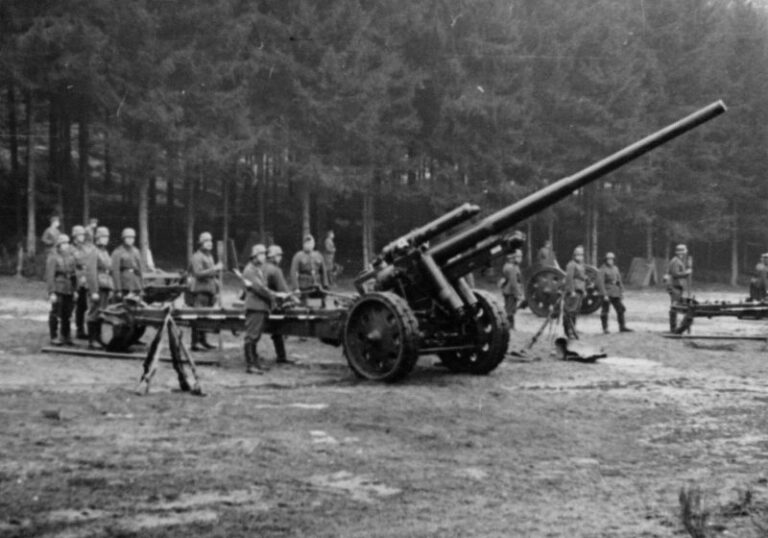
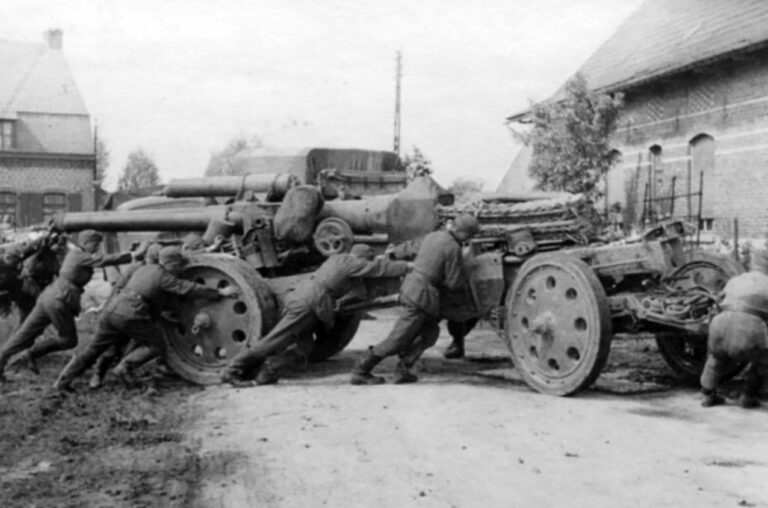
The 10cm schwere Kanone 18 entered German service registers as a long-range heavy field gun, distinct from the howitzer in trajectory and purpose. Designed by Krupp and Rheinmetall, it provided counter-battery and interdiction fire. Though its principal fame lay ahead, its doctrinal lineage was shaped during the Spanish testing ground.
Deployed, it represents reach — both literal and strategic.
10cm schwere Kanone 18 – Limbered
Range is meaningless without redeployment.
Mounted on a two-part carriage system for transport, the sK 18 demonstrated the engineering complexity of heavy artillery mobility. Its presence in the late 1930s German register underscored long-range doctrinal emphasis. Limbered, it showcases the engineering sophistication underpinning operational depth.
Steel, timber, mathematics — and patience.
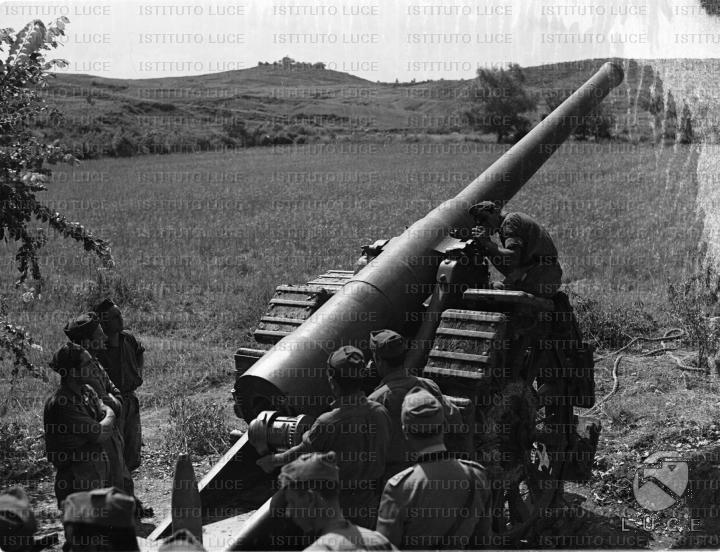
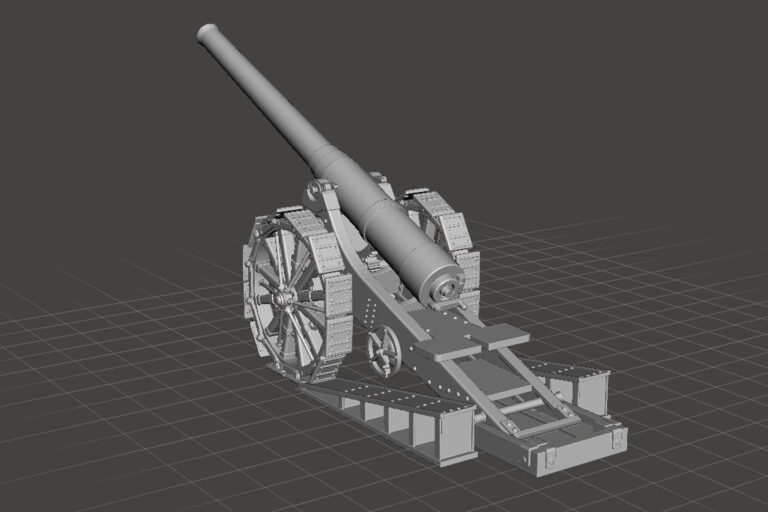
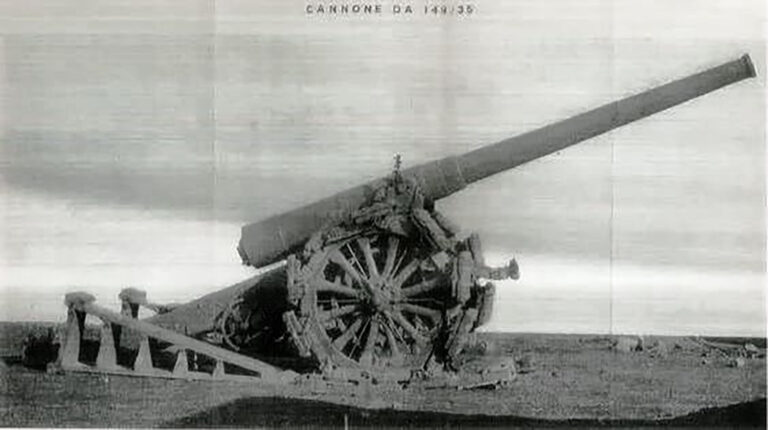
Cannone da 149-35A – Level Barrel
Now we enter the realm of true heavy artillery.
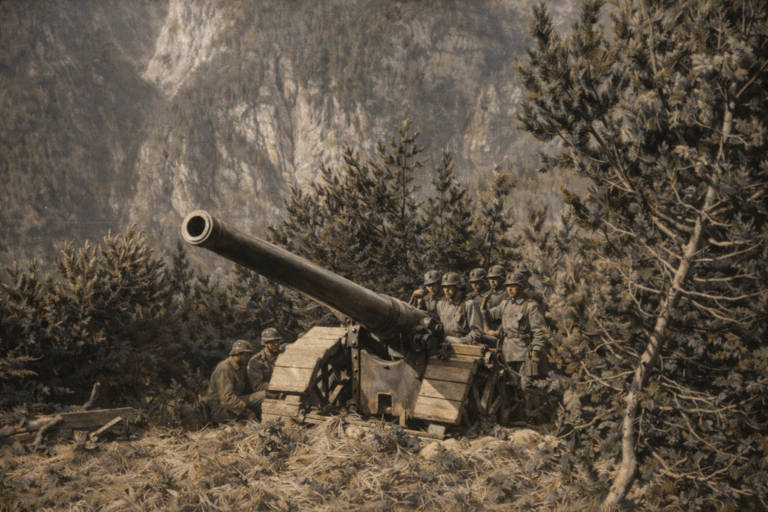
The 149-35A, of Italian manufacture, was a heavy field gun retained in interwar registers for corps-level support. Its 149mm calibre provided substantial destructive capacity. In Spain, such heavy pieces were utilised in siege-like conditions and preparatory bombardments against fortified Republican positions.
Level barrel signals deliberate, sustained fire.
Cannone da 149-35A – Raised Barrel
Elevation amplifies gravity.
With extended elevation capability, the 149-35A could engage targets at significant depth. In Spain, heavy artillery increasingly shaped offensives characterised by methodical advance rather than manoeuvre. Though rooted in earlier industrial periods, it proved brutally effective.
Raised, it conveys the full authority of calibre.
Obice da 149-12 Mod.1914 – Limbered
The Great War’s inheritance marched again.
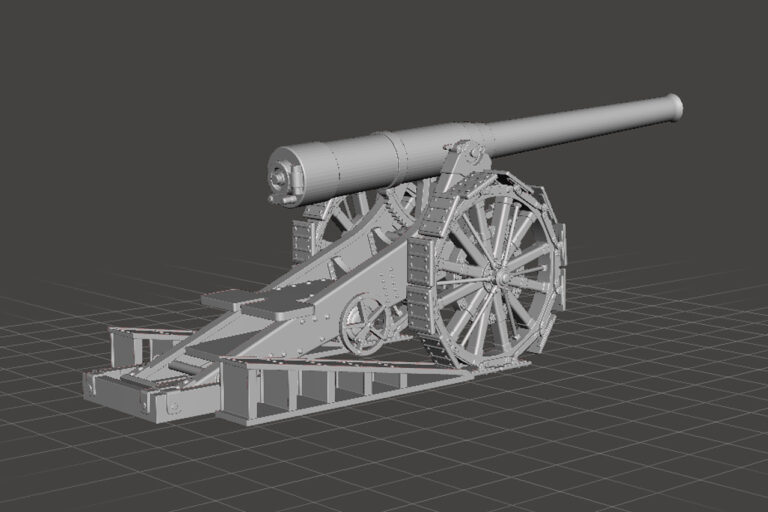
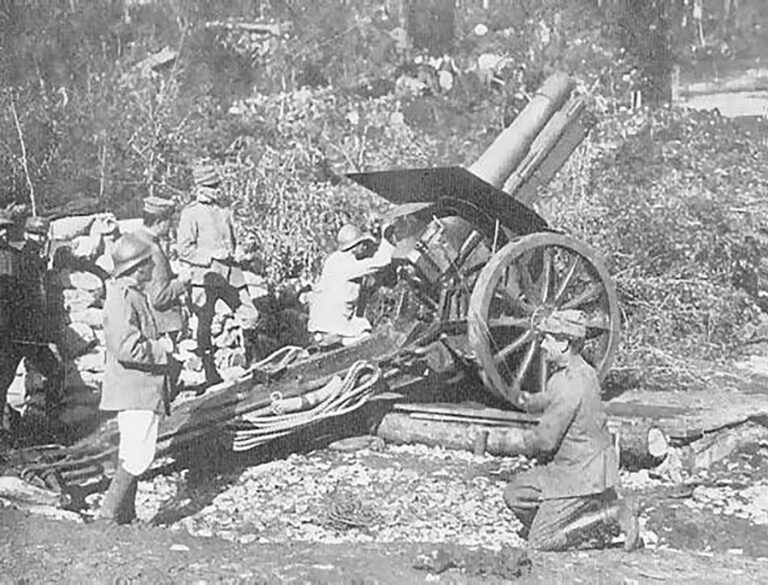
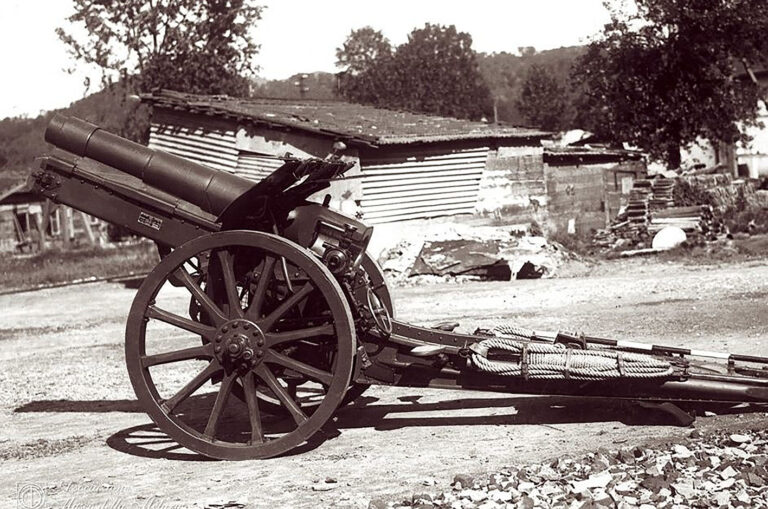
Originally a First World War howitzer, the 149-12 remained in Italian service registers into the 1930s. Its heavy high-explosive shell made it suitable for positional warfare. In Spain, limbered movements reflected the careful positioning required before major bombardments.
Old designs rarely retire quietly.
Obice da 149-12 Mod.1914 – Level Barrel
Heavy howitzers defined siege warfare.
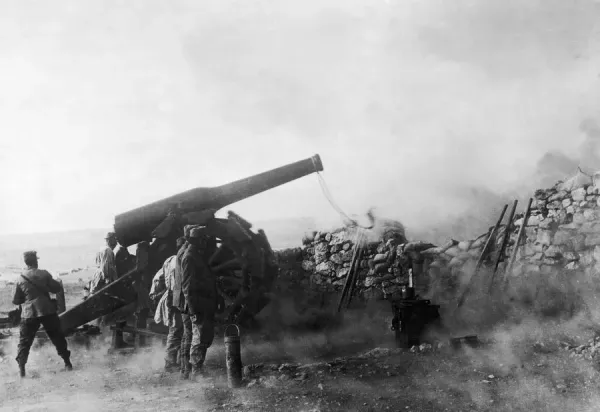
Entered into Italian registers during the First World War, the 149-12’s hydro-spring recoil system allowed controlled high-angle fire. In Spain, it was employed against entrenched defensive lines, reinforcing Nationalist advances through deliberate bombardment.
Level barrel: measured preparation before devastation.
Obice da 149-12 Mod.1914 – Raised Barrel
Artillery ascends before it descends.
Its elevation permitted plunging fire over obstacles and into fortified zones. Spanish Civil War operations demonstrated the continued relevance of heavy high-angle artillery in semi-static fronts.
Raised, it is geometry in service of war.
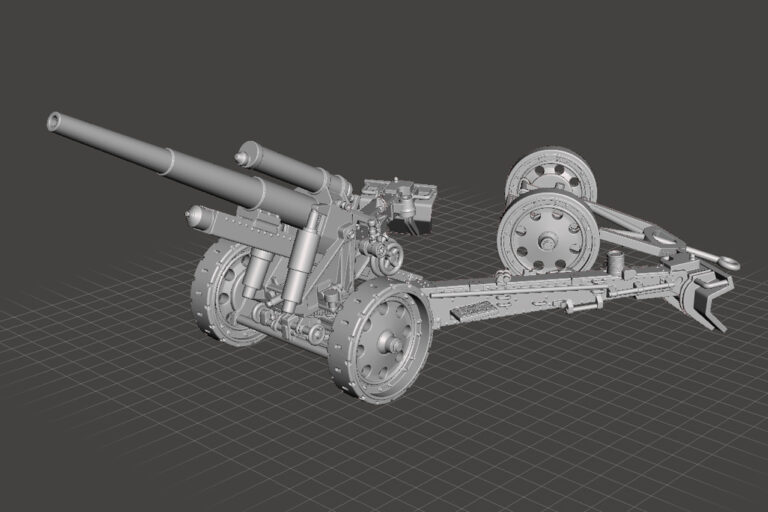
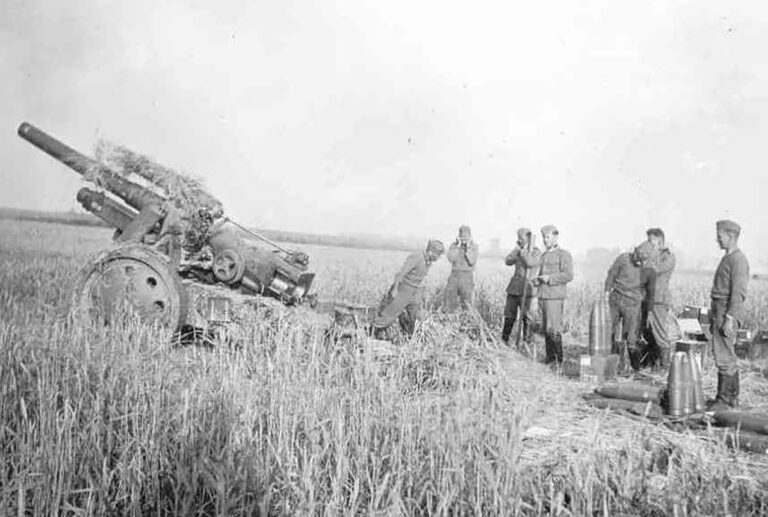
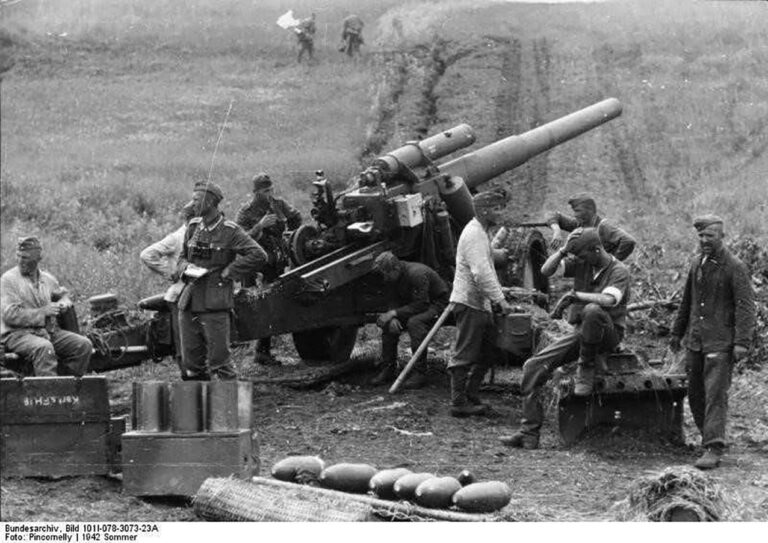
Krupp-Rheinmetall 15cm sFH 18 – Deployed
The heavyweight of divisional artillery.
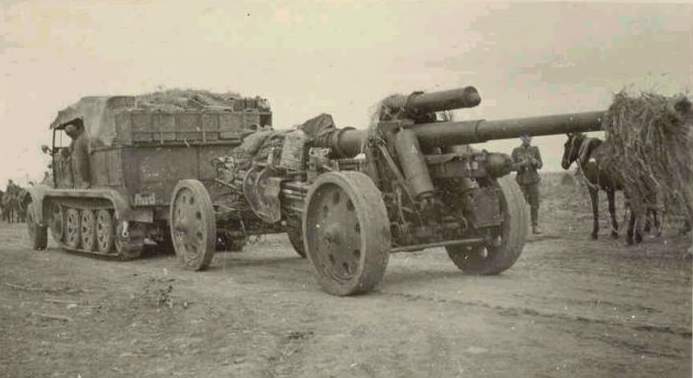
Entering German service registers in the mid-1930s, the 15cm schwere Feldhaubitze 18 combined Krupp and Rheinmetall design expertise. With 149mm calibre and advanced recoil systems, it embodied modern heavy howitzer doctrine. Spain provided indirect experiential influence for German artillery planning and tactical evaluation prior to broader conflict.
Deployed, it represents doctrinal maturity.
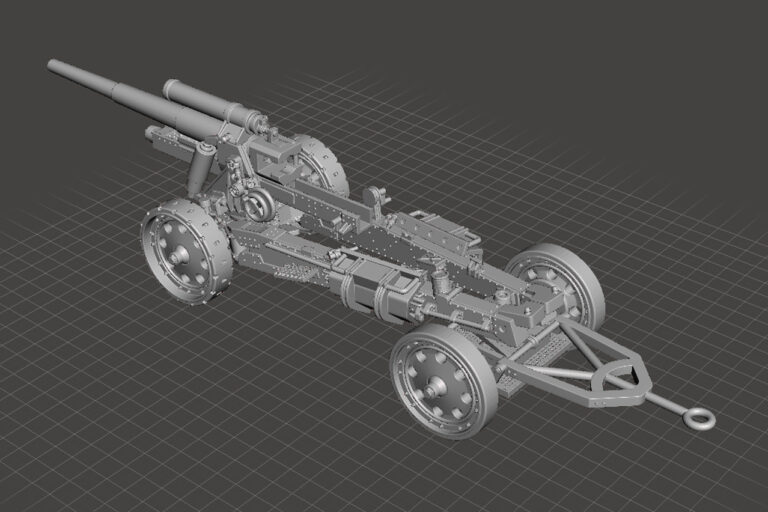
Krupp-Rheinmetall 15cm sFH 18 – Limbered
Every heavy blow begins with movement.
Engineered for motor traction and entered into structured Wehrmacht divisional establishments, the sFH 18 symbolised Germany’s artillery renaissance. Though its greatest campaigns lay beyond March 1939, its doctrinal foundations were sharpened during the Spanish crucible.
Limbered, it concludes our battery — a study in steel, mathematics, and measured violence.
Final Thoughts from Bayonets & Brushes
These new releases collectively represent the artillery grammar of the Spanish Civil War — anti-aircraft, anti-tank, mountain, field, and heavy systems that shaped operations between 1936 and March 1939. Each miniature in our range is designed for historically grounded collectors, diorama builders, and wargamers seeking technical authenticity.
For the discerning modeller, scale matters as much as material. Our Spanish Civil War artillery pieces are produced in true scale ratios that align seamlessly with the infantry and armour you already collect — whether you’re composing grand army lists or crafting dioramas that capture key historical moments. Consistency of scale ensures that guns, crews and terrain speak the same visual language, eliminating the jarring effects that can occur when disparate models are mixed.
Miniature wargaming has always balanced historical fidelity with tabletop playability. Scales such as 15mm — a favourite within the Spanish Civil War community — occupy that sweet spot where detail remains crisp without overwhelming your gaming table. The models we produce at Bayonets & Brushes are designed not just to be accurate, but to work within the social and mechanical frameworks of wargames, allowing you to command batteries, redeploy units and recreate pivotal engagements with both aesthetic pride and strategic nuance.
Finally, let us speak to the heart of the hobby: the joy of making things. Whether you are painting your first gun shield or applying weathering to a heavy howitzer that has seen its share of mock combat, the process of assembling, finishing and fielding these models enriches both your collection and your understanding of history. In this way, your artillery pieces become more than static figures; they are tools for storytelling, focal points for campaigns, and monuments to the craft that brings history to life on table and in mind.
At Bayonets & Brushes, we do not merely produce miniatures. We curate ordnance history — in resin and discipline.