
Mobility first. Firepower immediately after…
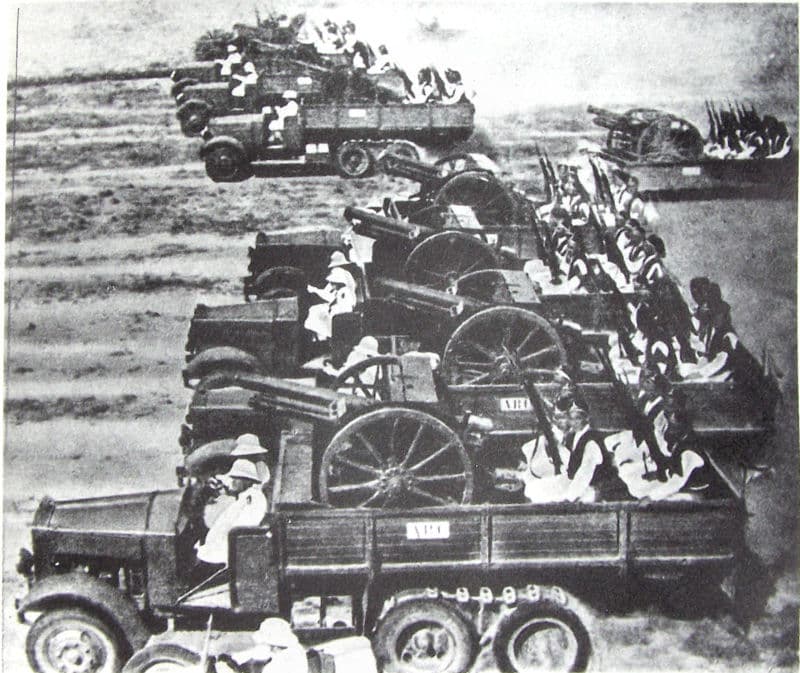
Italian gun trucks are often dismissed as makeshift solutions — weapons bolted onto civilian chassis in a moment of desperation. But that framing misses the operational reality of the campaigns Italy fought. In North Africa especially, mobility was survival. Supply lines stretched across vast distances, air attack was constant, and fixed gun positions could be bypassed in hours. A weapon that could move with the convoy was not a compromise — it was doctrine adapting in real time.
The Regio Esercito entered the desert war with a logistical footprint built around trucks. Unlike mountain artillery doctrine, which emphasised pack transport, the North African theatre demanded wheels and engines. Convoys carrying fuel, water and ammunition were lifelines. Protecting them required organic firepower that could respond instantly to air attack or fast-moving enemy columns. The answer was simple: mount guns on the vehicles already doing the work.
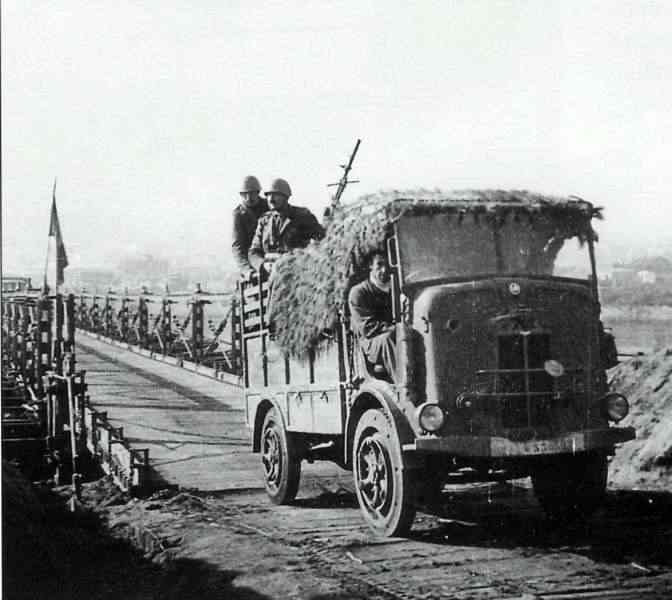
Italian industry and field workshops alike adapted accordingly. Light and medium trucks were fitted with Breda 20mm autocannon, 47mm anti-tank guns and even heavier pieces in some cases. These were not random lash-ups — they were practical battlefield conversions designed to keep guns mobile, supplied and ready to fire within seconds. In an environment where engagement ranges were long and threats could appear suddenly over the horizon, that responsiveness mattered.
In the anti-aircraft role, gun trucks were particularly valuable. The Breda 20/65, already a versatile weapon, became even more effective when mounted on a truck bed. A convoy could halt, deploy outriggers or simply fire from the chassis, and create a mobile umbrella of defensive fire. Against low-flying aircraft, speed of response was often more important than elaborate fire control systems.
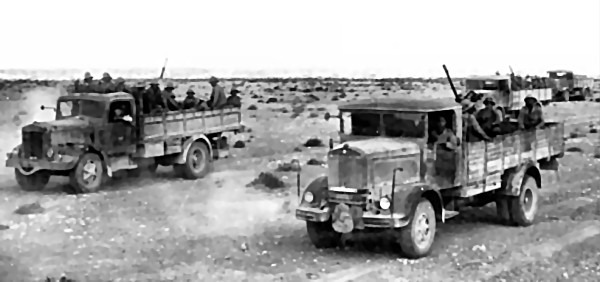
Gun trucks also blurred the line between air defence and ground combat. In desert fighting, 20mm and 47mm weapons were frequently turned against infantry, soft-skinned vehicles and even light armour. Italian units learned quickly that flexibility was power. A convoy escort might become a blocking force; an air-defence vehicle might spearhead a pursuit against retreating reconnaissance elements.
Ultimately, Italian gun trucks represent adaptation under pressure. They reflect a military operating across vast spaces with finite resources, finding ways to multiply firepower without waiting for entirely new vehicle programs. On the tabletop and in the display cabinet, they capture something uniquely dynamic about the Italian war effort: mobility, improvisation and the constant need to protect the lifelines that kept armies moving.
Now… let me introduce you to our range…
Autocannone 90-53 su Breda 52
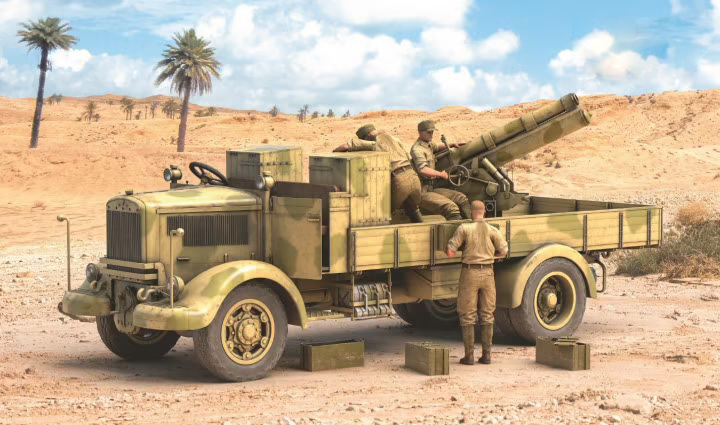
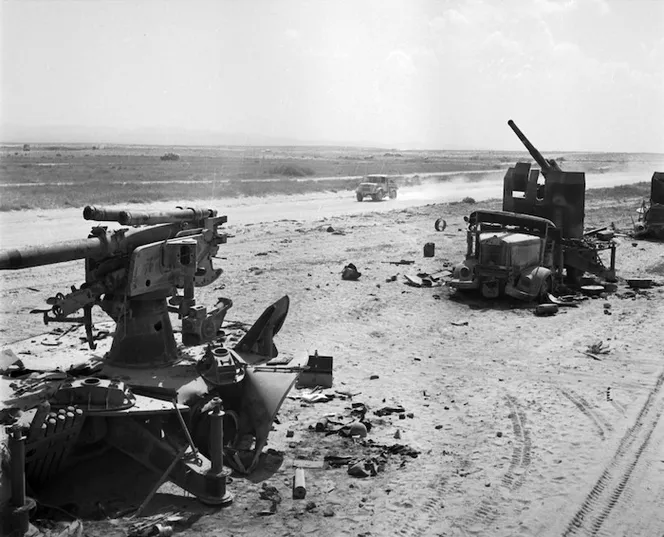
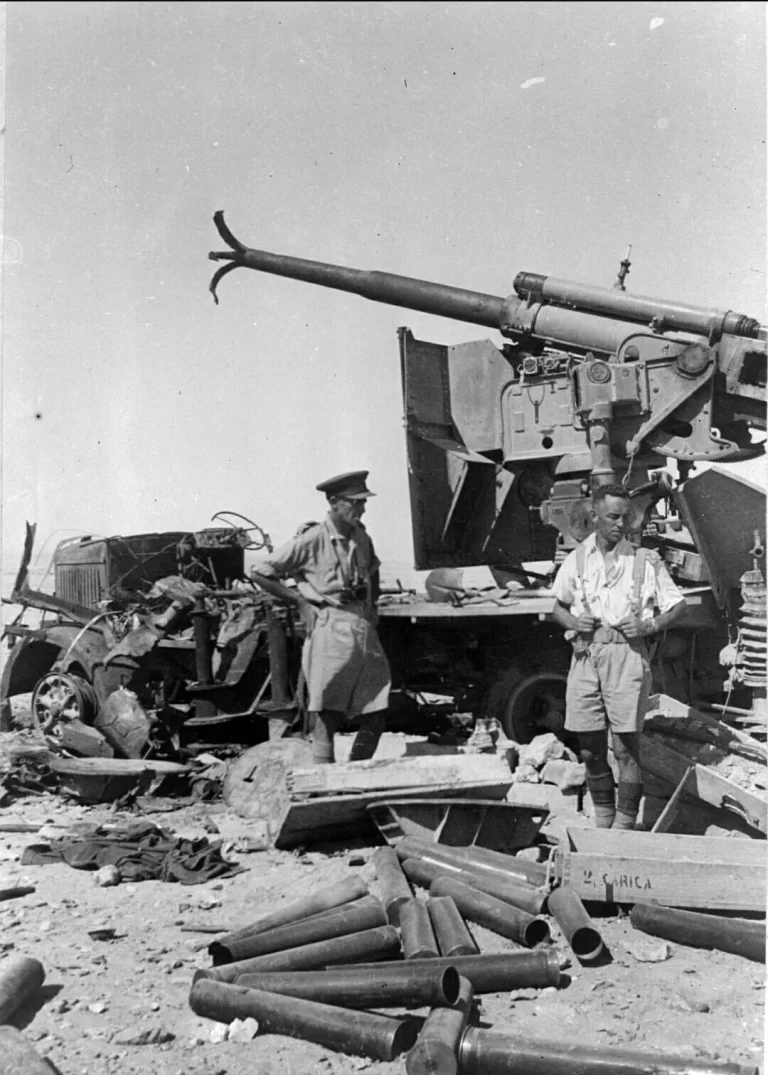
The 90/53 on the Breda 52 truck is Italian improvisation at its most uncompromising: take the finest long-range gun in the arsenal and put it on wheels. The result is a roaming heavy hitter built for the realities of North Africa — vast sight lines, sudden contact, and the constant need to reposition before the enemy can react. It’s not elegant. It’s brutally practical.
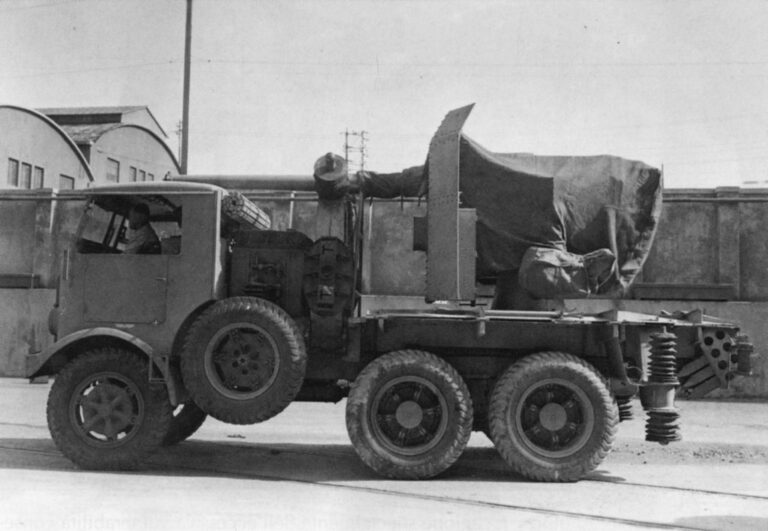
Technically, the concept is simple: the 90/53 delivers exceptional anti-tank and anti-aircraft performance, while the truck mount provides strategic mobility. The trade-off is protection. Crews are exposed, the vehicle is tall, and the platform demands disciplined siting and swift displacement. Used well, it is an ambush predator: fire first, relocate fast, and never let the enemy close the distance.
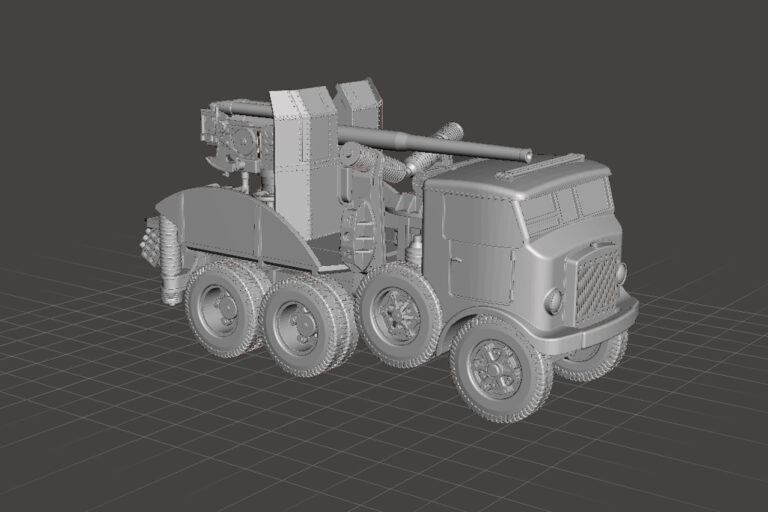
On the battlefield, these gun trucks excelled in long-range anti-tank work, especially where terrain allowed open arcs of fire. They also provided powerful mobile air defence when required, though their true value was as a deterrent — something that could reach out and punish armour before it could influence the fight. Their rarity only adds to the mystique: when one appears in a scenario, it should feel like an event.
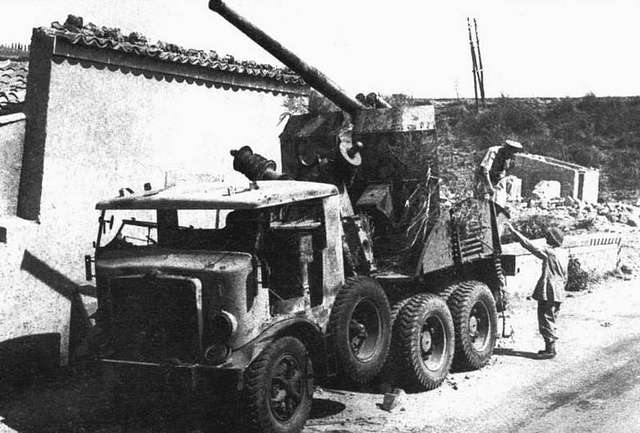
For modellers and wargamers, this is a centrepiece model with instant narrative gravity. It suits desert ambush scenarios, convoy defence, and “hunter-killer” missions where the gun truck must strike and escape. Add ammunition limits, a towing/support vehicle, or a requirement to protect the gun from infantry infiltration, and you’ve got a unit that plays with tension and drama — exactly as a 90mm gun on a truck should.
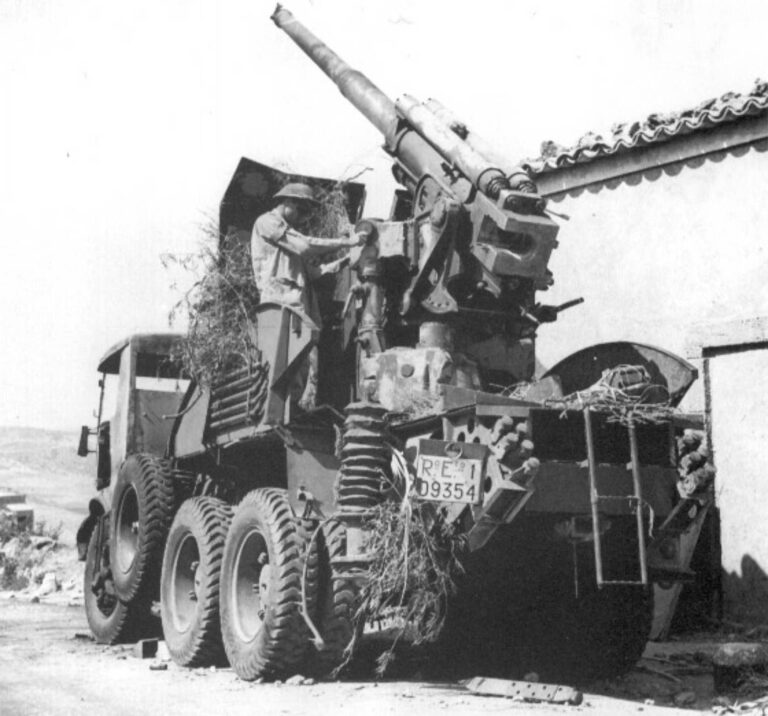
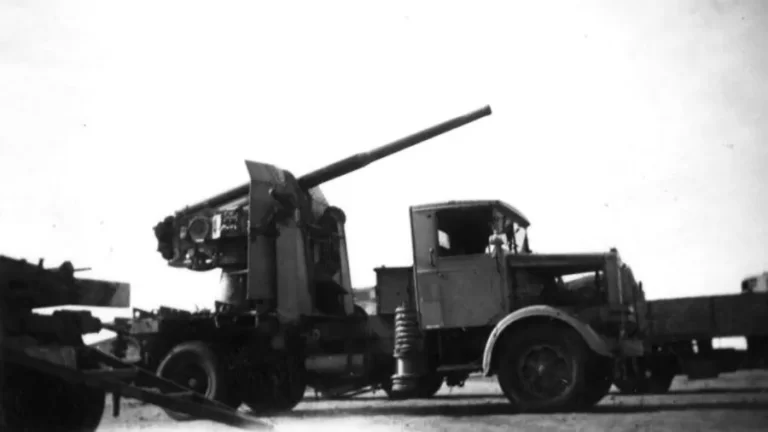
Autocannone 90-53 su Lancia 3RO
If the Breda 52 version was formidable, mounting the 90/53 on the rugged Lancia 3RO chassis produced an equally dramatic expression of Italian mobile firepower. The 3RO was one of Italy’s most reliable heavy trucks, and pairing it with the powerful 90mm gun created a long-range anti-tank and anti-aircraft platform capable of shifting rapidly across theatre-scale distances. It’s a weapon system that exists because desert war rewards mobility above almost everything else.
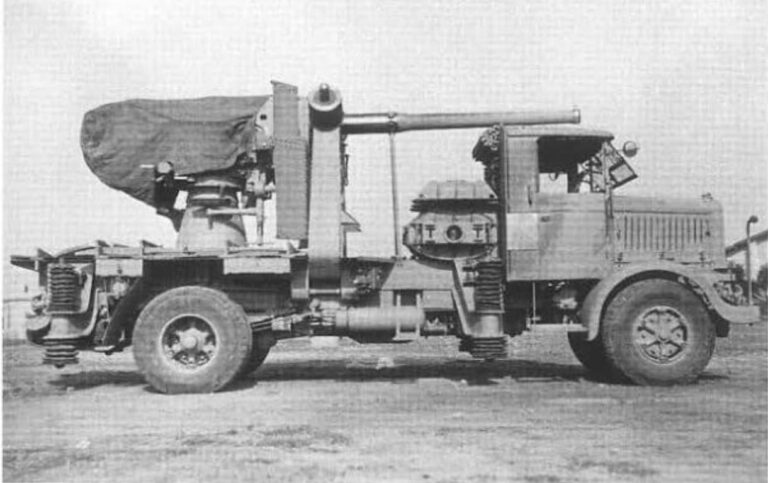
The technical balance is familiar: immense ballistic performance, minimal protection. The 90/53 could penetrate serious armour at extended range, but the open mounting left the crew vulnerable to air attack, artillery splinters and close infantry assault. That vulnerability shaped its use — these were not brawling vehicles, but mobile snipers of the battlefield, relying on positioning and early engagement to survive.
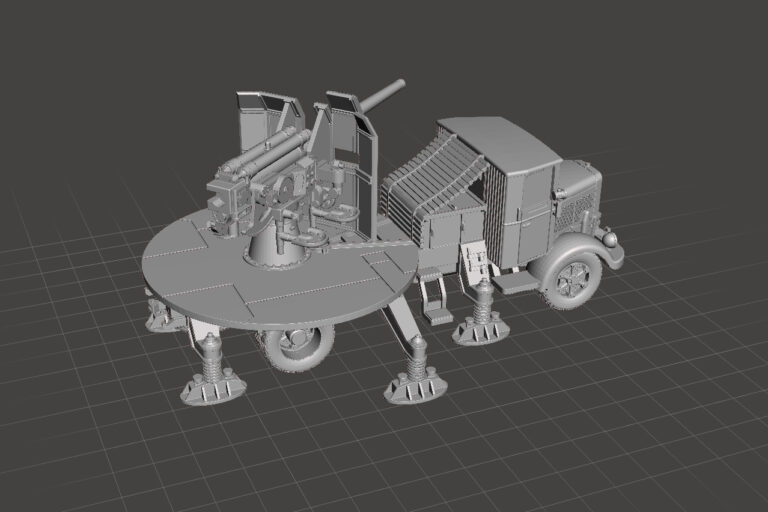
Operationally, the Lancia-mounted 90/53 variants were best suited to defensive screens, long-range interdiction and reinforcement of threatened sectors. In open desert environments, where visibility was measured in kilometres, such platforms could dominate key approaches. Their presence forced caution on opposing armoured forces and reinforced Italian defensive belts during critical phases of the North African campaign.
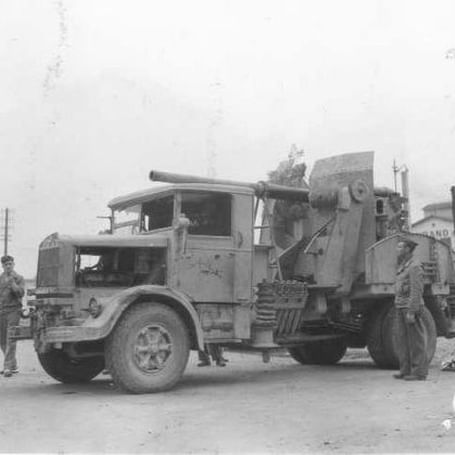
For modellers and wargamers, the 90/53 on Lancia 3RO is visually striking and tactically rich. It works brilliantly in long-range duel scenarios or as a high-value asset that must be protected and supplied. On the tabletop, it creates natural objectives: neutralise the heavy gun, escort it to a new firing point, or hold the line long enough for it to make its shots count. It’s dramatic, vulnerable and powerful — exactly the kind of centrepiece that defines a desert narrative game.
Autocannone da 75-27 CK su Ceirano 50 CMA truck
Developed in the early 1930s, the Autocannone da 75/27 CK su Ceirano 50 CMA represents one of Italy’s earliest deliberate experiments with mobile artillery. This was not a wartime lash-up born of desperation; it was a pre-war concept shaped by interwar thinking about speed, colonial campaigning and mechanised fire support. By mounting the proven 75/27 gun on a truck chassis, Italy was actively exploring how to keep artillery mobile in expeditionary and fast-moving environments.
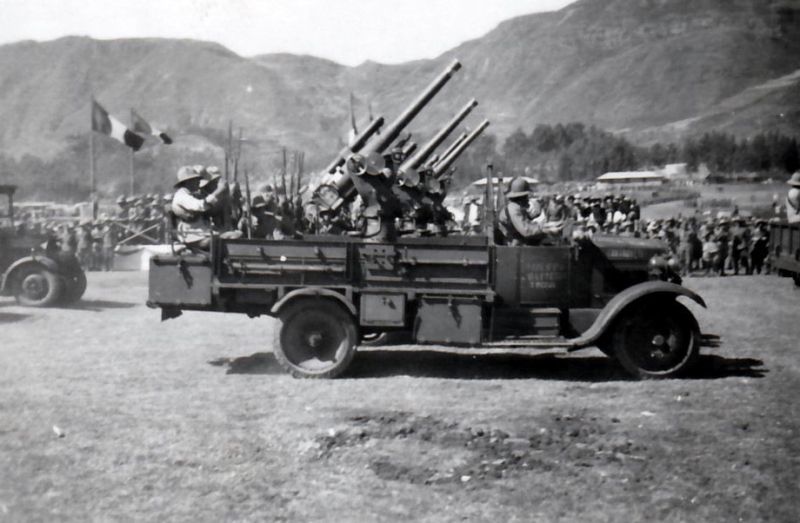
The design saw operational use during the Spanish Civil War, where Italian forces deployed it as part of the Corpo Truppe Volontarie. In Spain, it demonstrated the practical strengths of the concept: rapid repositioning, the ability to support advancing infantry, and flexible response to developing engagements. While not heavily protected, its mobility and immediate availability made it valuable in fluid fighting.
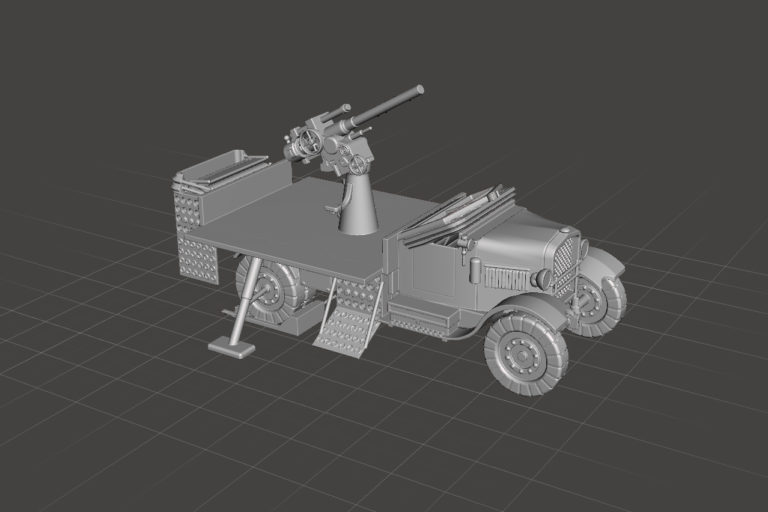
Technically, the 75/27 CK retained the dependable ballistic performance of the standard field gun. What changed was tempo. Mounted on the Ceirano chassis, it could travel with mechanised columns and deploy quickly without the need for traditional limbering and towing procedures. That trade-off — protection for speed — reflects Italian doctrinal interest in responsiveness long before the desert campaigns made it essential.
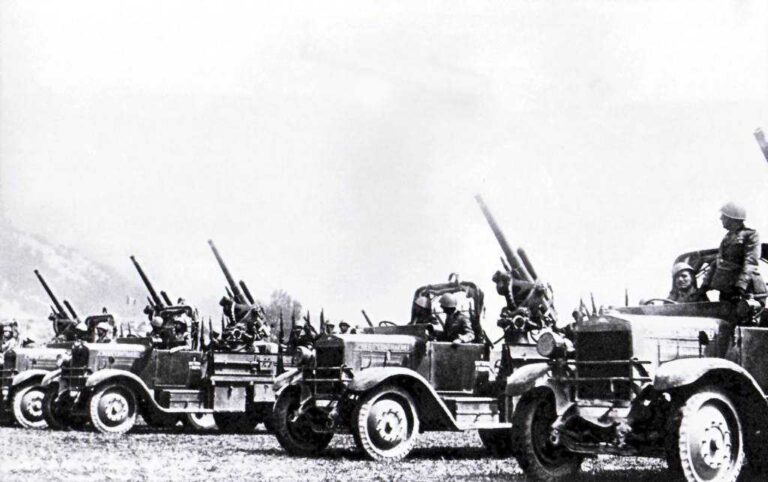
For modellers and wargamers, this variant opens up fascinating early-war and Spanish Civil War scenarios. It fits beautifully into interwar expeditionary forces and transitional mechanised formations. On the tabletop, it works as mobile fire support that can reposition quickly — perfect for narrative games where speed, flexibility and convoy protection matter just as much as raw firepower.
Autocannone da 75-27 su Fiat SPA TL37
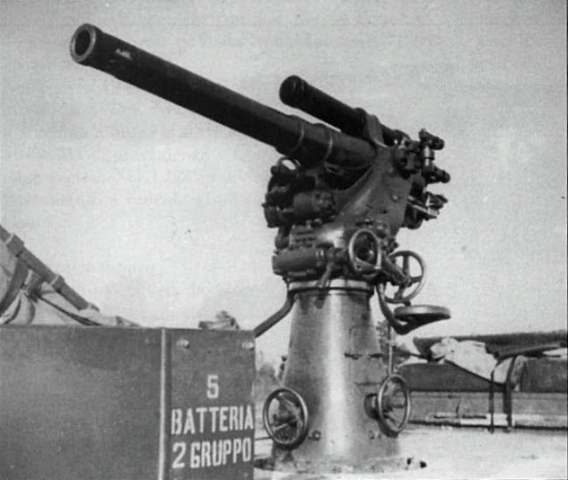
The Fiat SPA TL37 was originally designed as a light artillery tractor, prized for its excellent cross-country performance and four-wheel steering. Mounting the 75/27 field gun onto this agile chassis transformed it into a highly flexible mobile fire-support platform. Unlike heavier truck mounts intended primarily for road movement, the TL37-based autocannone could operate in rougher terrain, aligning well with Italy’s long-standing emphasis on mobility in difficult landscapes.
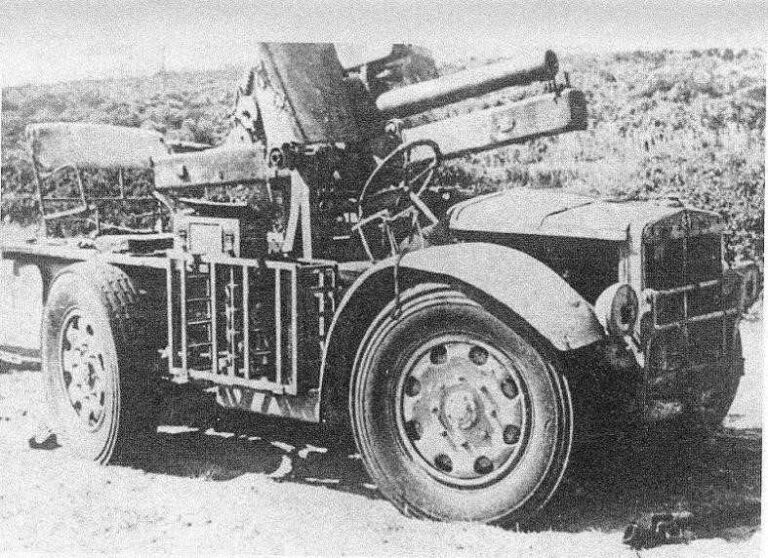
Retaining the dependable 75/27 gun, this configuration delivered familiar and effective high-explosive fire, but with greatly improved tactical responsiveness. The TL37’s manoeuvrability allowed the gun to be brought forward over broken ground, repositioned quickly, and withdrawn before counter-fire could take effect. Protection remained minimal, so success depended on careful siting, surprise and disciplined displacement.
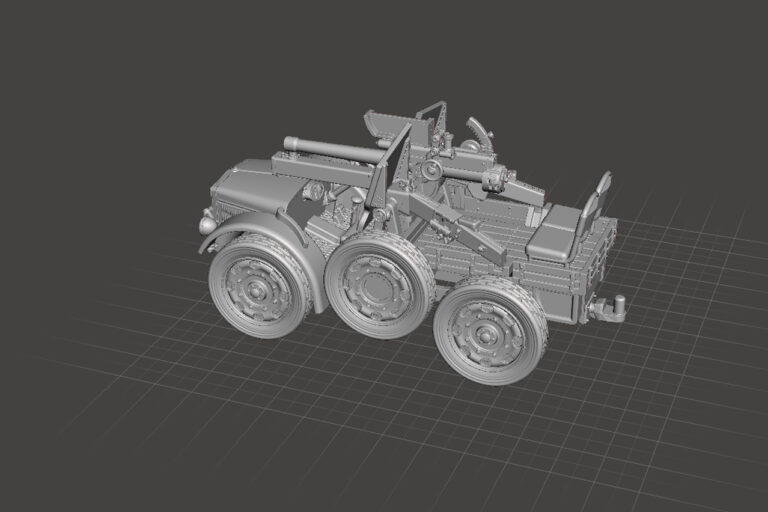
Operationally, such platforms were well suited to fluid environments where artillery needed to keep pace with mechanised or motorised elements. In North Africa and other open theatres, the ability to rapidly shift firing positions reduced vulnerability while maintaining pressure. It represented another example of Italy leveraging existing vehicles to enhance battlefield flexibility rather than waiting for purpose-built armoured solutions.
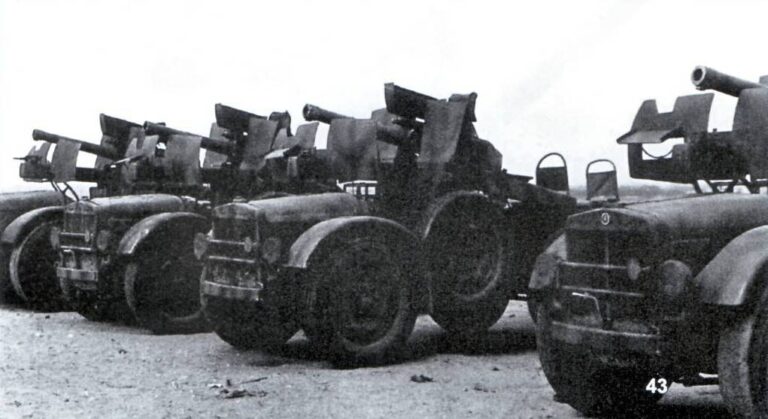
For modellers and wargamers, the TL37-mounted 75/27 is rich with character. It works brilliantly in fast-moving desert scenarios, convoy actions, or mobile defensive screens. Its lighter profile compared to heavy truck-mounted guns gives it a different visual and tactical feel — more nimble, more opportunistic. It’s an ideal choice for players who enjoy manoeuvre-based artillery that feels dynamic rather than static.
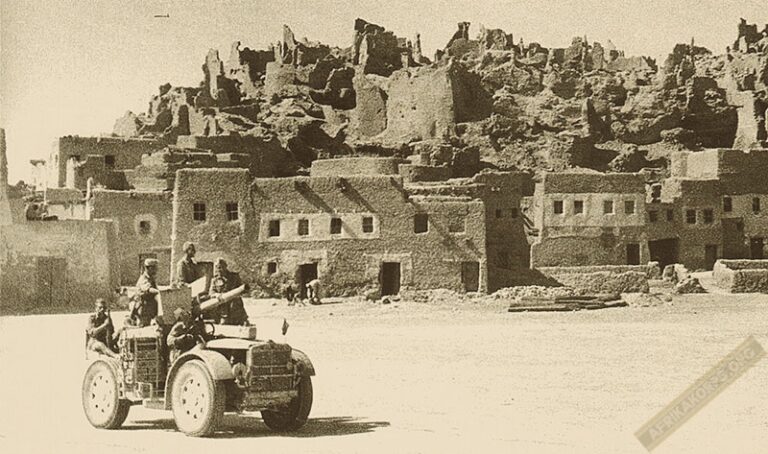
Autocannone da 102-35 su Fiat 634N
Mounting the powerful 102/35 naval gun onto the Fiat 634N truck created one of the most striking examples of Italian mobile heavy firepower. The 102mm gun, originally designed for maritime use, brought impressive range and shell weight to land operations. In adapting it to a truck chassis, Italy demonstrated a willingness to repurpose available weapons to meet the demands of wide, fast-moving theatres such as North Africa.
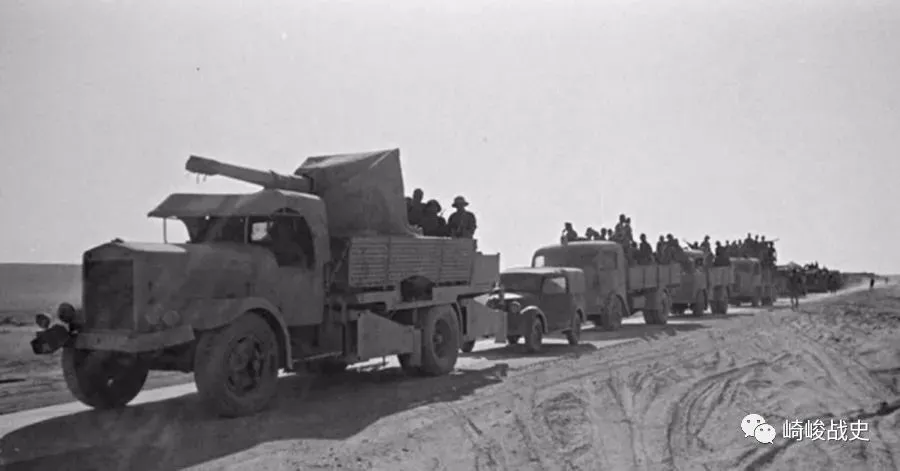
Ballistically, the 102/35 offered serious punch. It was capable of engaging fortified positions, long-range targets and even armoured threats under the right conditions. However, as with many gun truck conversions, protection was minimal. The large gun and open mounting required careful positioning and supporting elements to guard against air attack and infantry infiltration.
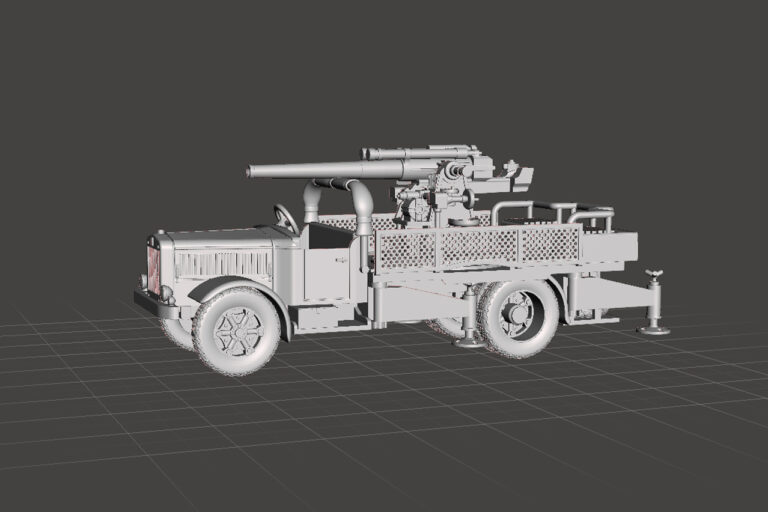
Operationally, such heavy autocannoni were most effective when used in prepared or semi-prepared positions, reinforcing defensive sectors or acting as long-range fire support for mobile columns. In desert conditions, the ability to move the gun between firing points rather than rely on fixed emplacements provided valuable operational flexibility.
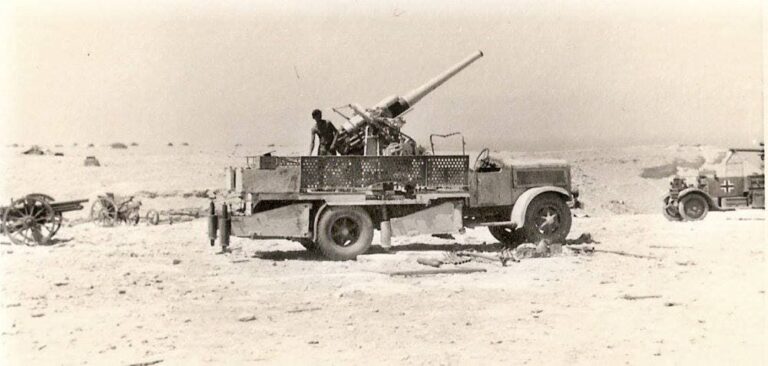
For modellers and wargamers, the 102/35 on Fiat 634N is a dramatic centrepiece. It fits convoy defence, long-range interdiction and defensive-line scenarios perfectly. Visually imposing and historically distinctive, it adds a layer of heavyweight capability to Italian forces while still retaining the narrative vulnerability that makes gun trucks tactically exciting to field.
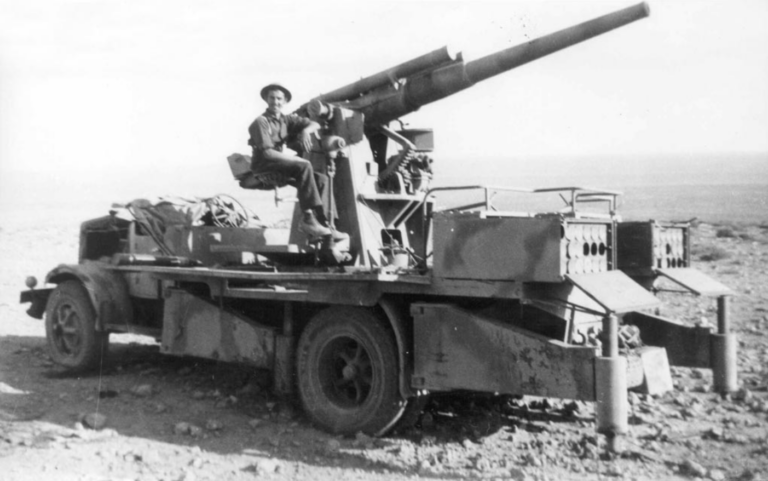
Autocanone da 100-17 su Lancia 3RO
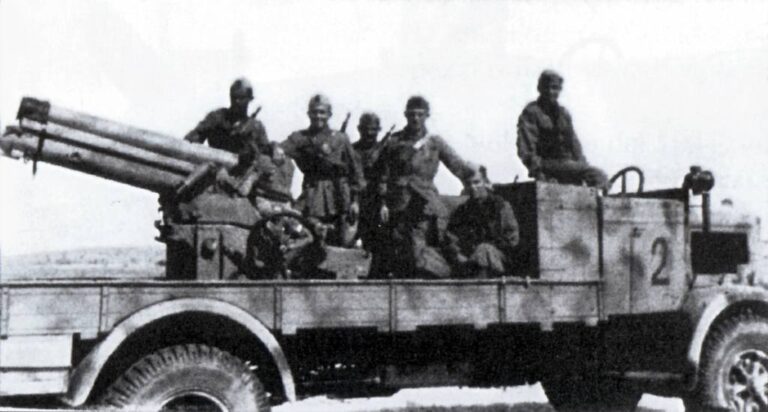
The Autocannone da 100/17 su Lancia 3RO combines a classic medium howitzer with one of Italy’s most dependable heavy truck chassis, producing a mobile fire-support platform built for flexibility. The 100/17 howitzer delivered a heavier shell than the common 75mm guns, making it valuable for smashing strongpoints, supporting assaults and delivering plunging fire into defiladed positions — all while retaining the ability to relocate quickly with motorised columns.
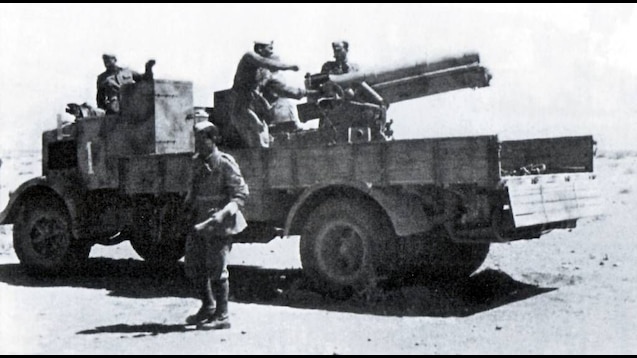
As a howitzer, the 100/17 excelled at high-angle fire rather than long, flat trajectories. On a truck mount, it gained operational mobility: the gun could be shifted rapidly along roads and tracks, supporting dispersed forces across wide spaces. The price, as ever with gun trucks, was crew vulnerability. Open mountings demanded smart siting and good security, because once the enemy closed the distance, survivability dropped sharply.
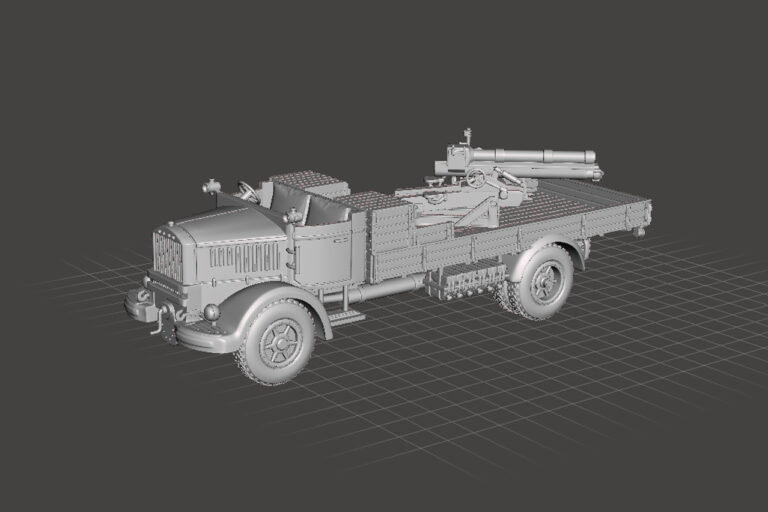
In theatre, platforms like this were most useful in North Africa and other environments where the battle could move faster than traditional towed artillery could comfortably keep up. They offered immediate, “good enough right now” fire support without waiting on complex gun-line logistics. When used as a mobile battery element — firing, displacing, firing again — they could be surprisingly disruptive.
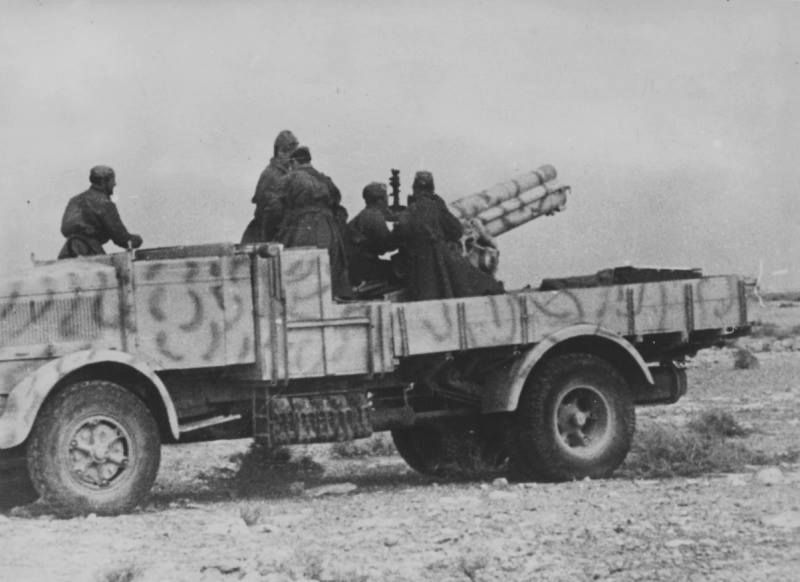
For modellers and wargamers, this is a superb combined-arms enabler. It gives Italian forces a mobile indirect-fire option that feels different from the sleek, armoured Semovente — more exposed, more improvisational, but potentially devastating when employed well. It’s perfect for scenarios involving moving columns, rapid response fire missions, and batteries that must fight for their survival as much as for their effect.
Fiat Dovunque 35 w. Breda 20-65 M.1935
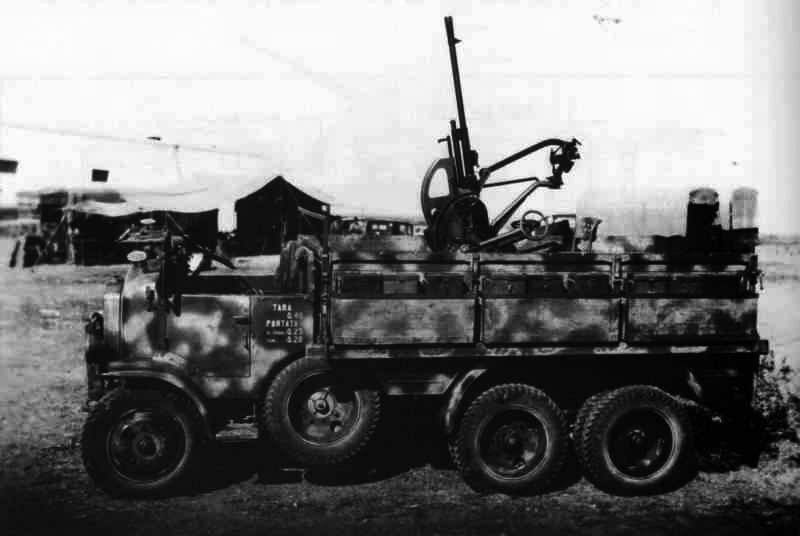
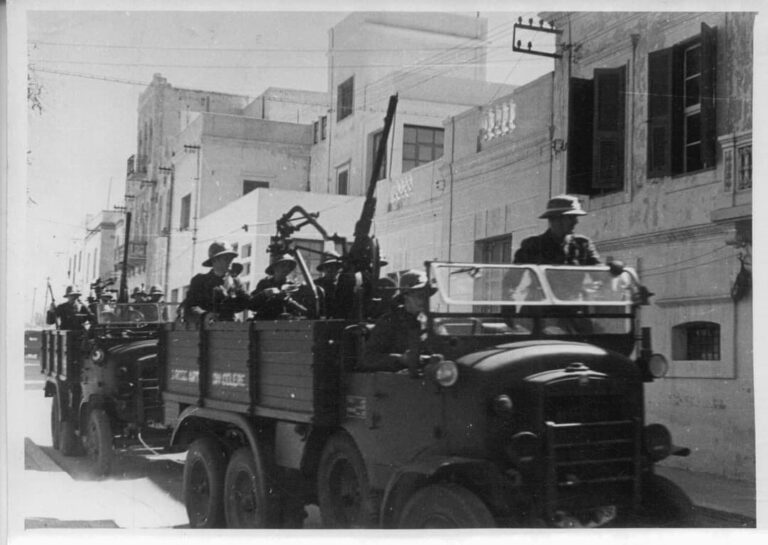
This is the quintessential Italian convoy guardian: a rugged Fiat Dovunque 35 carrying the Breda 20/65 autocannon, ready to snap into action the moment aircraft appear or enemy vehicles crest the horizon. The Dovunque (“anywhere”) name wasn’t marketing fluff — it was built for cross-country movement, making it a natural choice for mounting a light AA weapon that needed to travel with columns across harsh ground and poor roads.
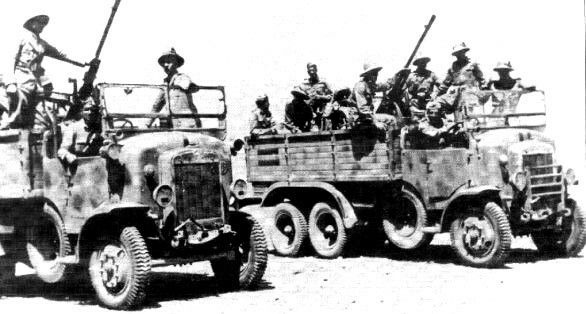
The Breda 20/65 was already valued for its versatility, and on a truck mount it became even more useful. In the anti-aircraft role it could throw up fast, accurate fire against low-level attacks. On the ground it was a brutal support weapon, shredding soft-skins, suppressing infantry and punishing light armour at close ranges. Its rapid response was the real advantage: this gun could be where the fight was, immediately.
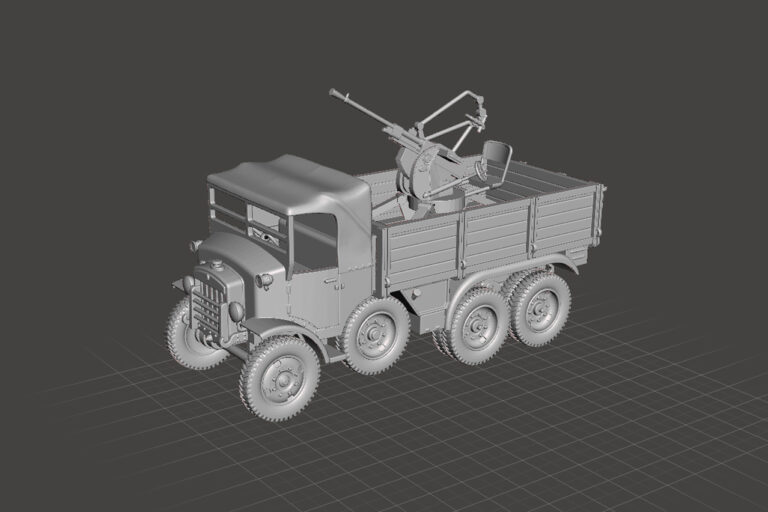
In operational terms, this kind of mount shines in the messy reality of North Africa and the Mediterranean: air threat, hit-and-run raids, sudden contact and the constant need to keep supply moving. It also suits security work in the Balkans, where mobile columns needed immediate defensive firepower against ambushes and road threats. It’s less a “weapon platform” and more a mobile insurance policy.
For modellers and wargamers, it’s pure scenario fuel. Escort missions, air-attack events, roadblocks, rapid reaction drills — this model fits them all. It also looks fantastic with stowage and crew detail, and it gives Italian forces a unit that plays dynamically: reposition, cover arcs, protect high-value vehicles, and punish anything that gets too close.
Fiat SPA Autoprotetto S-37 w. 47-30 AT Gun
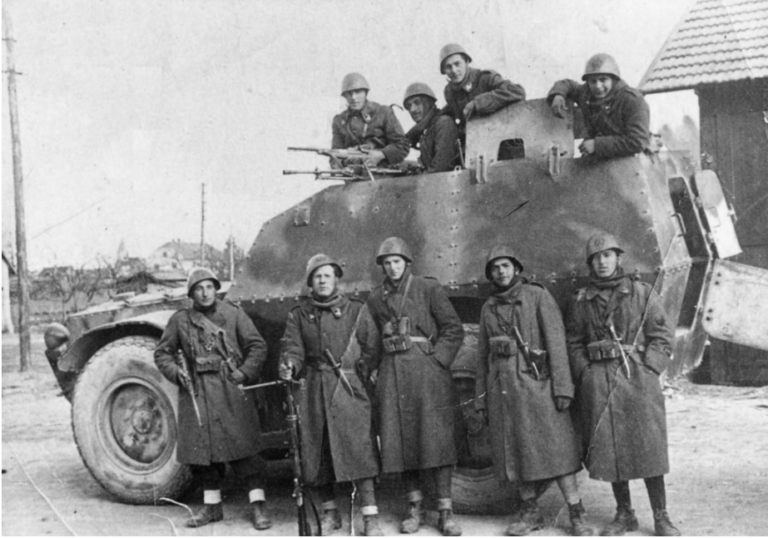
The Autoprotetto S-37 is Italian improvisation wearing a helmet — a protected gun truck built to solve a very specific problem: how do you keep mobile anti-tank firepower alive long enough to matter? Instead of an exposed weapon on an open truck bed, the S-37 wrapped its crew and gun in armoured plating, creating a boxy, purposeful vehicle designed for escort duty, security operations and close-range firefights where soft-skin gun trucks simply bled out too quickly.
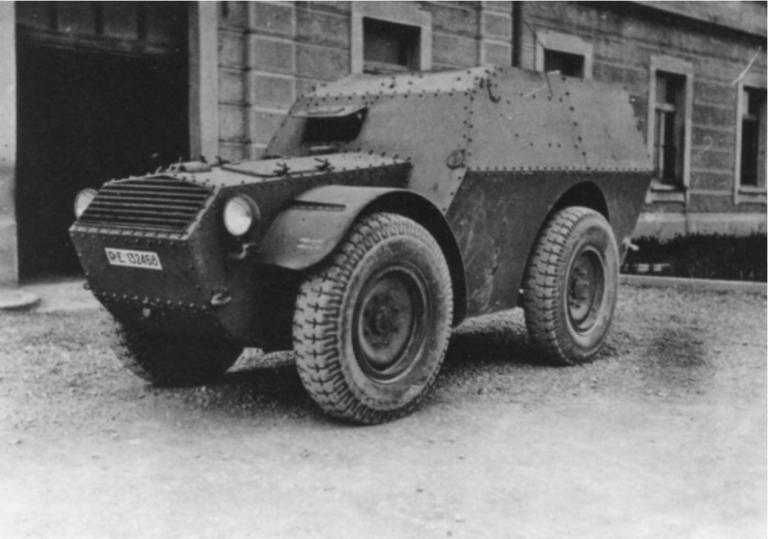
Mounting a 47/30 anti-tank gun gave it credible bite against light armour and armoured cars, and a dangerous direct-fire role against strongpoints and roadblocks. It wasn’t meant to trade shots with medium tanks head-on, but it was absolutely suited to ambush tactics, chokepoint defence and rapid reaction work — the kinds of engagements that define convoy warfare and anti-partisan operations.
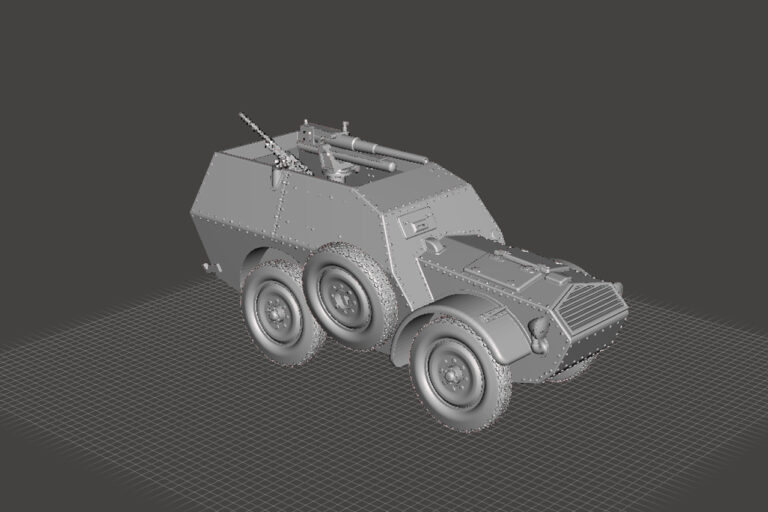
Operationally, protected gun trucks like the S-37 make most sense in the later-war environment: increased air threat, more intense small-arms fire, and more frequent close-quarters engagements in Italy and the Balkans. The added armour improved survivability and allowed crews to stay in the fight longer, especially in messy, infantry-heavy actions where a purely open mount would be a liability.
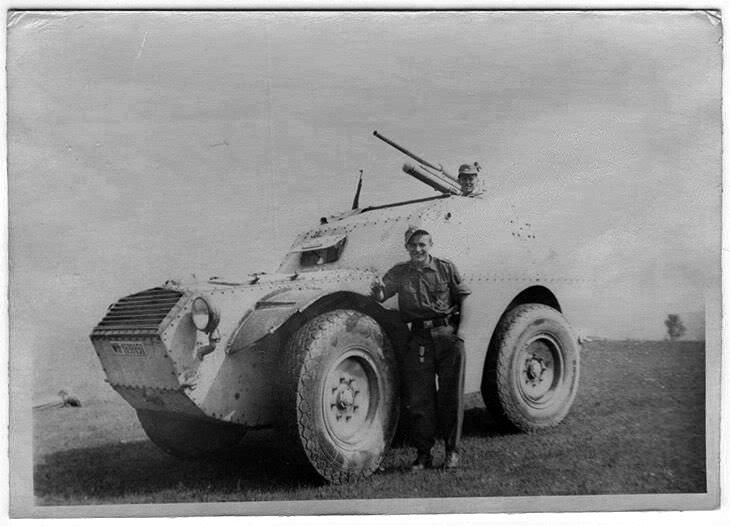
For modellers and wargamers, the S-37 is a fantastic utility piece with real tabletop personality. It fits convoy escort scenarios perfectly and adds a “harder edged” option to Italian mobile forces. Its slab-sided armoured body begs for weathering, markings and stowage, and in play it rewards smart positioning — guarding flanks, holding roads, and punishing anything that tries to rush the column.
Semovente Ruotato da 90-52 Breda 501
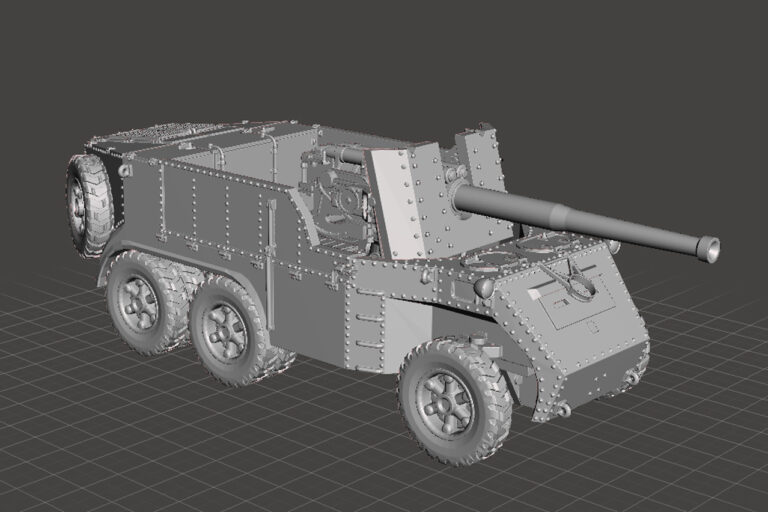
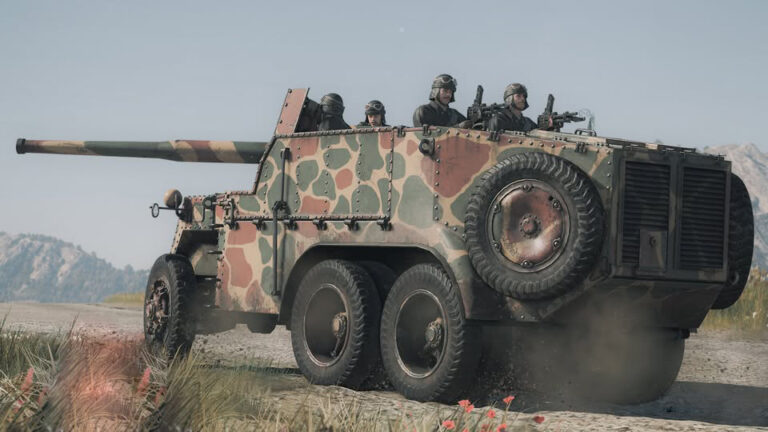
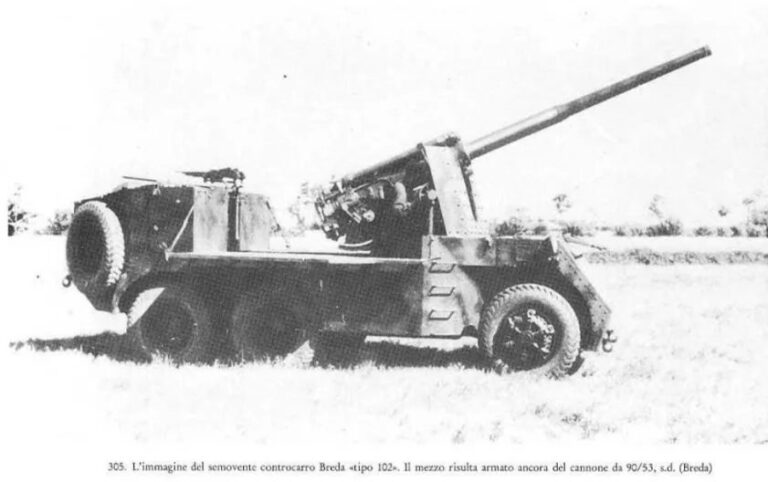
The Breda 501 is what happens when a gun truck grows teeth and confidence. Rather than a field conversion, this was a purpose-built wheeled anti-tank platform mounting the formidable 90/52 gun on a heavy truck chassis. It represents the logical evolution of earlier autocannoni — taking the concept of mobile heavy firepower and refining it into something closer to a dedicated tank destroyer.
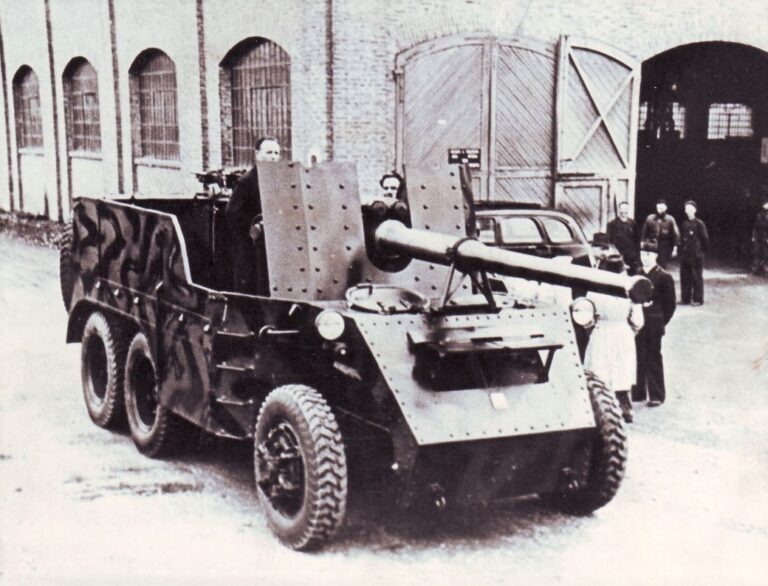
The 90/52 gun delivered serious anti-armour performance, capable of engaging contemporary Allied tanks at meaningful ranges. Unlike open-bed gun trucks, the Breda 501 featured a more integrated fighting platform, though protection remained limited compared to tracked tank destroyers. It was designed to strike first, at distance, and reposition — a wheeled ambush predator rather than a breakthrough vehicle.
Emerging late in the war, the Breda 501 reflects Italy’s continued effort to answer the increasing armour threat despite industrial and strategic collapse. Its wheeled configuration offered better road speed and simpler logistics than tracked equivalents, making it suitable for rapid redeployment along defensive lines in Italy. It was a modern idea constrained by timing and circumstance.
For modellers and wargamers, the Breda 501 is a standout late-war option. It bridges the gap between gun truck and tank destroyer, offering powerful anti-tank capability in a visually dramatic package. Perfect for Italian Campaign scenarios, defensive roadblocks or mobile reserve actions, it adds punch and narrative weight to any Italian force that needs a serious long-range answer.
SPA-Viberti AS42 'Metropolitana' w. 47-32 AT Gun
The AS42 ‘Metropolitana’ is Italian special operations mobility distilled into a single vehicle: fast, lightly built, and designed to operate far from support. Based on the Sahariana family but tailored toward more general or homeland use, the Metropolitana variant still carries that raiding DNA — speed, range and firepower in a compact footprint. Mounting the 47/32 anti-tank gun turns it from a reconnaissance machine into a genuine hunter, ideal for ambush work and sudden, violent contact.
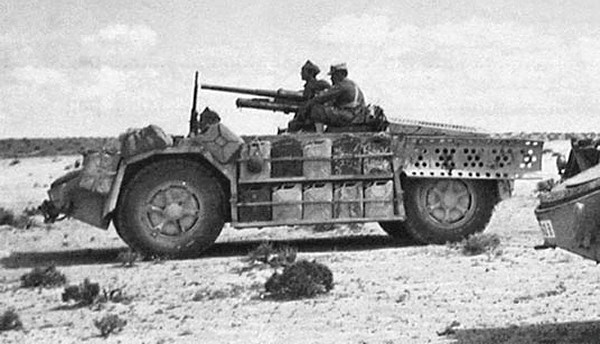
The 47/32 was Italy’s ubiquitous light anti-tank gun: portable, low-profile, and lethal when used intelligently. On the AS42 it gains mobility and the ability to strike quickly from unexpected angles, particularly against light armour, armoured cars and soft-skinned columns. The vehicle’s weakness is obvious — protection is minimal — so it lives and dies by initiative, surprise and disciplined withdrawal.
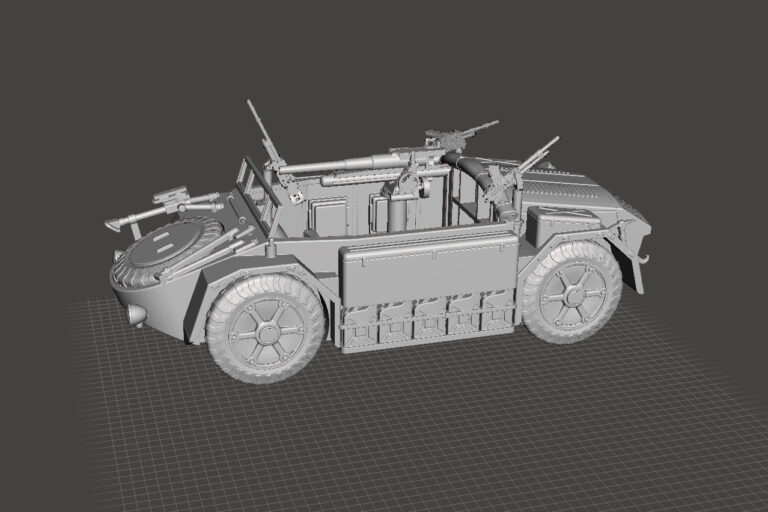
Operationally, AS42 variants are closely associated with reconnaissance and raiding forces, particularly in the later-war period and in Italian theatres where mobility and irregular warfare became increasingly important. Think rapid strikes, road interdiction, convoy attacks and quick repositioning rather than set-piece battles. It’s the kind of weapon you use to shape the enemy’s movement, not to hold ground.
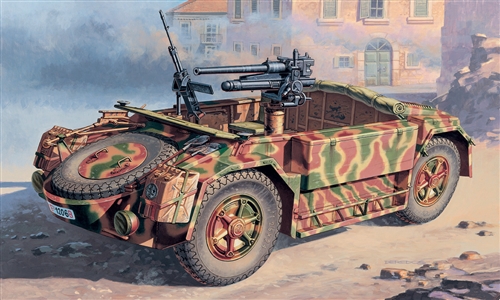
For modellers and wargamers, this is pure scenario gold. It fits raids, reconnaissance screens and special detachments, and it plays like a scalpel: strike a flank, hit a soft target, then vanish behind terrain. Visually it offers huge character — stowage, fuel cans, kit strapped everywhere — and it gives Italian forces a unit that feels distinct from conventional armour: fast, risky, and wonderfully cinematic.
SPA-Viberti AS42 'Sahariana' w. 20mm Solothurn AT Gun
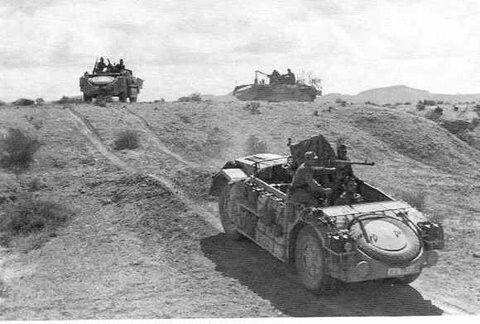
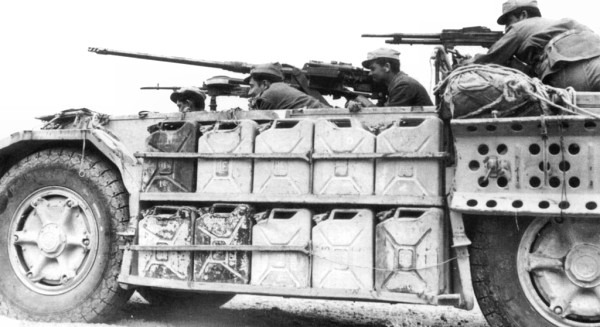
The AS42 ‘Sahariana’ is perhaps the most iconic of Italy’s desert raiding vehicles — low, wide, and bristling with fuel cans for long-range operations deep into the Sahara. Designed for reconnaissance and special forces-style missions, it embodied speed and endurance over protection. When fitted with the 20mm Solothurn anti-tank rifle, it gained a sharp sting capable of threatening light armour and punishing soft targets with alarming efficiency.
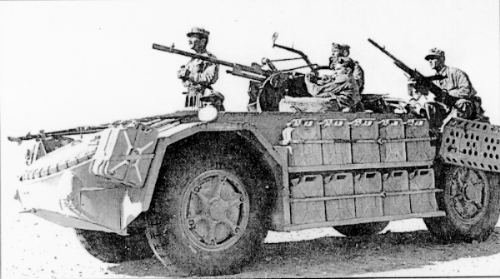
The Solothurn 20mm weapon delivered high-velocity fire that could penetrate light armour at practical combat ranges. On the agile AS42 chassis, it became a hit-and-run weapon: engage from distance, strike vulnerable flanks, and reposition before return fire could find its mark. The platform was never meant to absorb punishment — its survival depended on terrain use, speed and tactical audacity.
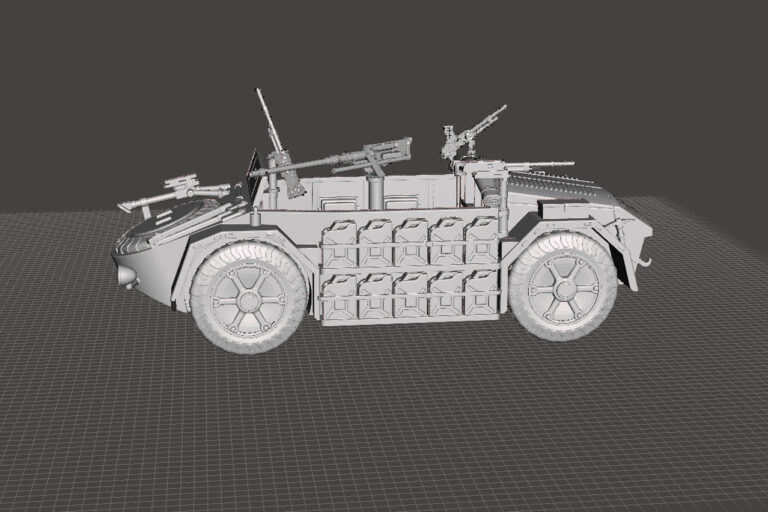
Operationally, Sahariane operated in the vast expanses of North Africa, often in independent or semi-independent formations. They escorted convoys, conducted reconnaissance in force and carried out aggressive patrols across remote terrain. In these roles, mobility and range were decisive. The addition of a 20mm anti-tank weapon ensured that even light armour had to treat them seriously.
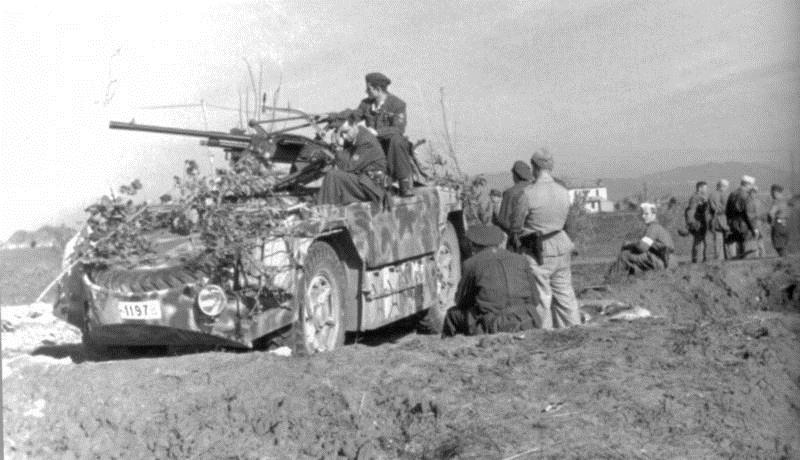
For modellers and wargamers, the AS42 with Solothurn is a narrative dream. It’s perfect for long-range patrol scenarios, desert raids and asymmetric engagements. Visually it offers incredible scope for detailing — jerrycans, tarps, personal kit and crew character — while tactically it rewards players who think in terms of flanking, harassment and controlled aggression rather than frontal assaults. It’s desert warfare distilled into one dynamic platform.
SPA-Viberti AS43 w. Breda 20-65
The AS43 represents the late-war evolution of Italy’s fast, lightly protected fighting vehicles — essentially an armoured development of the AS42 concept. With an enclosed armoured body and a turret mounting the dependable Breda 20/65, it combined reconnaissance mobility with meaningful firepower and improved crew protection. It’s the point where improvisation begins to solidify into a more formalised fighting vehicle.
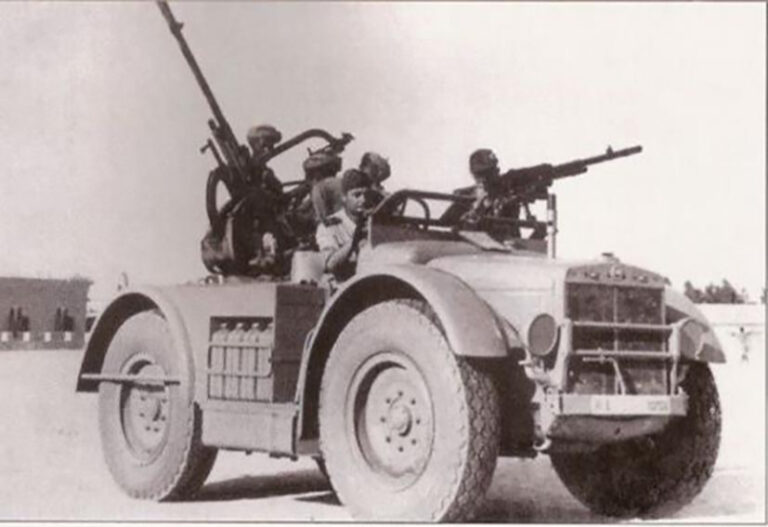
The Breda 20/65 gave the AS43 serious versatility. It could engage low-flying aircraft, shred infantry, destroy soft-skinned vehicles and threaten light armour — all from a rotating turret with better protection than earlier open mounts. The vehicle remained lightly armoured, but compared to the exposed Sahariane, it offered greater survivability in close engagements and urban or partisan-heavy environments.
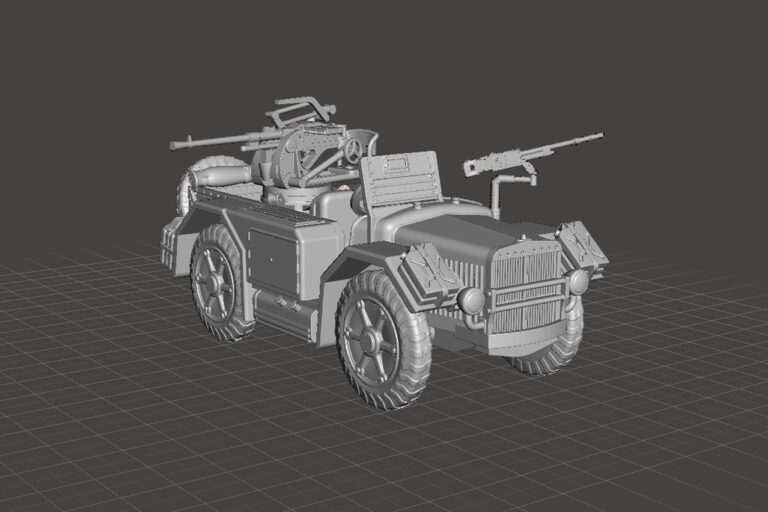
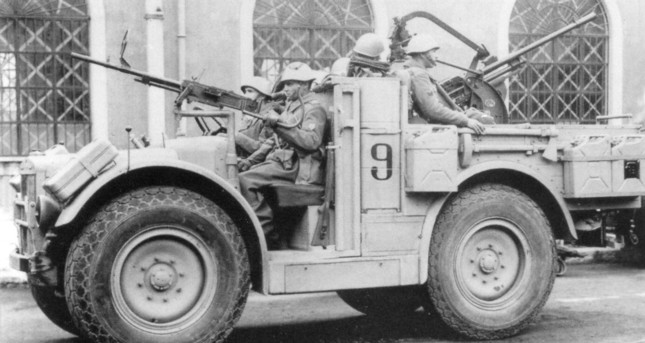
Operationally, the AS43 is most at home in the later-war Italian theatre, where fluid defensive lines, urban fighting and security operations dominated. It suited rapid reaction roles, convoy escort and anti-partisan sweeps, providing a mobile, protected fire platform that could respond quickly to developing threats. It reflects the ongoing Italian effort to refine mobile firepower even as resources tightened.
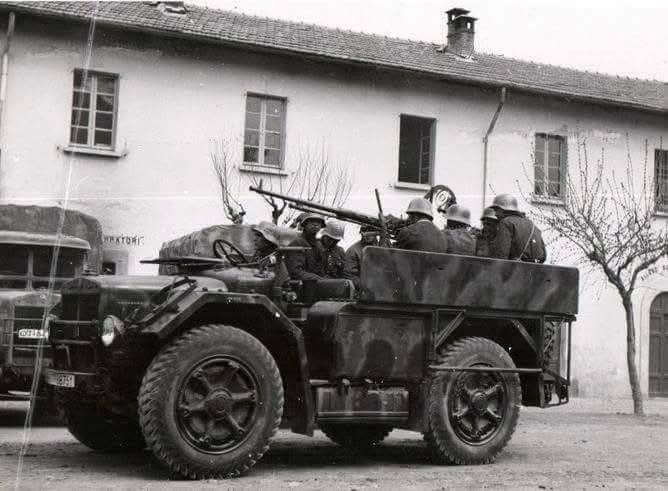
For modellers and wargamers, the AS43 is a superb late-war addition. It works beautifully in Italian Campaign scenarios, RSI formations or mixed Axis security forces. On the tabletop, it offers flexible fire support with just enough protection to survive risky manoeuvres, and visually it bridges the gap between open desert raider and conventional armoured car — a fitting end point to the Italian gun truck story.
Final Thoughts from Bayonets & Brushes
Italian gun trucks are where doctrine meets improvisation — and where necessity becomes innovation. They are not footnotes to the armoured story; they are a core expression of how Italy fought in wide, exposed theatres. When the convoy is the frontline, mobility is armour. These vehicles reflect a military that understood distance, understood vulnerability, and understood that firepower had to travel with the wheels.
What makes this range so compelling is the sheer spectrum it represents. From light Breda-armed escorts to towering 90mm heavy hitters, the gun trucks span air defence, anti-tank ambush, convoy protection and raiding warfare. They are not uniform solutions; they are answers to specific battlefield problems. And that specificity is what makes them so interesting to model and to play.
On the tabletop, gun trucks change the rhythm of a game. They introduce motion and urgency. Convoys must be protected. Heavy guns must be positioned carefully. Open-mounted crews must strike before they are struck. These are units that reward initiative and punish hesitation — fast, fragile and deadly in equal measure.
For scenario design, they are pure gold. Escort missions across open desert. Interdiction raids at dusk. Emergency redeployments to plug a breakthrough. Long-range anti-tank ambushes on a lonely ridge. Italian gun trucks encourage cinematic play, where positioning and timing matter just as much as raw statistics.
From a modelling perspective, they offer enormous personality. Stowage, spare tyres, ammunition crates, fuel drums, tarpaulins and crew details all add character. The desert environment in particular rewards weathering and storytelling — dust-choked chassis, sun-faded paint, improvised sand shields. Few vehicle types communicate theatre and narrative as immediately as a gun truck.
You wanna see what we got: https://bayonetsandbrushes.co.uk/home/store/world-war-ii-on-land/esercito-italiano-the-royal-italian-army/esercito-italiano-guntrucks/
At Bayonets & Brushes, we do not merely produce miniatures. We curate ordnance history — in resin and discipline.
And as ever, we remain at your service.